St. Joan of the Mashed Potatoes

cziemke's avatarThe Kale Whisperer

There are two major food groups: mashed potatoes, and everything else.

On Bethel Road in the 1960s, Sunday was all about mashed potatoes. Actually, to my mind, life is about mashed potatoes. Mashed potatoes are my perfect food. Mashed potatoes are my desert island food. I never get tired of them. When I’m celebrating, I eat mashed potatoes. When I’m sad, I eat mashed potatoes. Mashed potatoes are my stress food, my happiness food, and my just-regular-old-day food. I probably bleed mashed potatoes. I like them plain, with butter, with gravy, with olive oil, under creamed vegetables, stroganoff, or chili (weird, I know). In short, any day is better with mashed potatoes.

What are the roots of this mashed potato fixation? Well, the answer lies with St. Joan, the patron saint of mashed potatoes. While she has not yet been officially canonized, I’m working on her nomination. You see, St…

View original post 1,224 more words

St. Joan of the Mashed Potatoes

1381229_10200984997849299_1504327289_n

St. Joan of the Mashed Potatoes

There are two major food groups: mashed potatoes, and everything else.

On Bethel Road in the 1960s, Sunday was all about mashed potatoes. Actually, to my mind, life is about mashed potatoes. Mashed potatoes are my perfect food. Mashed potatoes are my desert island food. I never get tired of them. When I’m celebrating, I eat mashed potatoes. When I’m sad, I eat mashed potatoes. Mashed potatoes are my stress food, my happiness food, and my just-regular-old-day food. I probably bleed mashed potatoes. I like them plain, with butter, with gravy, with olive oil, under creamed vegetables, stroganoff, or chili (weird, I know). In short, any day is better with mashed potatoes.

What are the roots of this mashed potato fixation? Well, the answer lies with St. Joan, the patron saint of mashed potatoes. While she has not yet been officially canonized, I’m working on her nomination. You see, St. Joan’s mashed potatoes cured all ills and performed miracles. And every time I make mashed potatoes, she is sitting on my shoulder whispering “remember the lumps.” If I had to name one person who most shaped my lifelong food preferences, it would be St. Joan of the mashed potatoes.

1012852_10151784211238410_1993603695_n

Lisa, the Kale Whisperer, and Jeannie, with Sharon Chapel in the background during one of our late ice-age blizzards

I passed the first nine years of my life on Bethel Road, a gravel dead end street in Northern Virginia. It was an ideal place to be a kid. There was an excellent climbing tree at the bottom of our driveway, and my friends and I spent hours building villages and making up stories with the stones on the street. The houses (all three of them) were at the tops of the hills, so rolling down hills was a major activity. So was jumping off front stoops. In those days, it snowed a fair amount in the DC area (it was just at the end of the last ice age), and we sledded and built enormous snow forts. My bestie, Jeannie, and I would swing on my swing set, as high as we could go, and sing the Beatles” “Help” at the tops of our lungs. I still remember all the words, and when I sing them, I’m back on that swing.

One of our neighbors was All Saints’ Sharon Chapel Episcopal church, which was – for the first few years we lived there – a charming, wood, Civil War era chapel with a wonderful stained glass window of the Good Shepherd. My father played the organ there, and my mother was on the altar guild. Jeannie and her family went there, too. And every Sunday, I went to her family’s house for Sunday dinner. Her Mom, Joan, made a traditional Sunday dinner – roast beast, various vegetables, and . . . wait for it . . . MASHED POTATOES. The absolutely most extraordinary mashed potatoes in the entire mashed potato universe. She always – at least in those early years – mashed them by hand, so they were the ideal combination of creamy and lumpy. Rules 1-10 of mashed potatoes: MASHED POTATOES HAVE LUMPS. On the rare Sunday when there were no mashed potatoes, my little world collapsed.

I was born with wonky tonsils, and I spent an inordinate amount of my childhood housebound with tonsillitis. On those Sundays when I was too sick to go to Jeannie’s for Sunday dinner, Saint Joan would appear at the door with a bowl of mashed potatoes. When my parents finally gave in to the inevitable and had my tonsils taken out, I was unimpressed with promises of ice cream. But when St. Joan promised as many mashed potatoes as I could eat, I was there! Where’s the operating room? Bring on the ether!

At the age of six – just a few weeks before I was to be the flower girl at my Auntie J’s wedding – I rode my bike down a steep hill into a ditch (I knew how to go, I didn’t know how to stop), slashed open my chin (six stitches), and knocked out my two front teeth. When I got home from the Emergency Room, who was there waiting? Saint Joan of the mashed potatoes! Oh, joy! Manna from heaven.
1005737_10151784211408410_1352024660_n

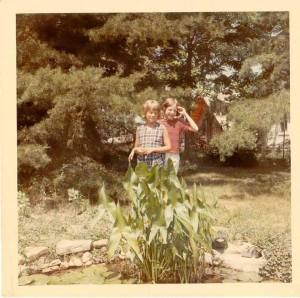
The Kale Whisperer and Jeannie in our backyard. I’d love to post a photo of St. Joan’s mashed potatoes, but they hadn’t invented digital cameras or foodies yet.

Who needs Lourdes when you have St. Joan’s mashed potatoes. They cured whatever ailed you.

When my family moved to Georgia in 1967, it seemed my mashed potato universe would implode. My Mom made nice smooth mashed potatoes with the mixer. I kept trying to explain that mashed potatoes have lumps. But she just couldn’t do lumpy mashed potatoes like St. Joan. It’s a gift. A calling. Happily, for years after we moved, I would take the Southern Crescent train from Georgia back to Alexandria: ostensibly to visit Jeannie, but really? It was a mashed potato pigrimmage.

Eventually, I grew up and Jeannie left home and the mashed potato pilgrimages ended. I still visited St. Joan from time to time, and she would look at me, and smile, and say “Awwww, little CARE – oh – line” in her distinctive West Virginia drawl and make me feel very loved. But the mashed potato days were over. The last time I saw St. Joan, she came to dinner with my folks at my townhouse in Annandale where I served, you guessed it, mashed potatoes. Were they up to snuff? Probably not, but St. Joan never criticized. She just smiled and said: “Awww! Little CARE-oh-line!”

There is a great deal of debate about mashed potatoes. Some experts insist they must be made with Russet (or, in the Southern Hemisphere, Agria) potatoes. Others advocate using waxy (Red Rose or Moonshine), or even new potatoes. I actually like a combination of floury and waxy: the waxy potatoes go all creamy and you can count on the floury potatoes (provided they aren’t over cooked) for some decent lumps.

St. Joan, as far as I remember, always peeled her potatoes, but I like to leave at least some unpeeled. This adds flavor, vitamins and all-important lumps.

As for mashing liquid, I’m agnostic regarding the relative merits of skim versus whole milk or cream. Just potato-cooking water will do in a pinch, or if you are vegan, but I never do it. The real key is to cook them just enough and not one bit more. And please, please, please, don’t let them sit in the cooking water. It won’t keep them warm, it will just make them watery. Better to go ahead and mash and then reheat in the oven. Mashed potatoes are very forgiving.

It’s all about the potatoes.

Mashed potatoes need fat. I’m a butter girl. I add butter before I mash, and more after I mash. Under certain circumstances, olive oil works. Margarine? You can if you want. I never touch the stuff.

I must confess to St. Joan that I never mastered hand mashing. I always watched her. She had this magical sort of round-and-round, full-body mashing technique. I’ve tried numerous types of potato mashers, and I just can’t get the right rhythm or that perfect cream / lump balance. I’ve used potato ricers and food mills. They make super fluffy, creamy, but, sadly, lump-free mashed potatoes. [They are good for mashing potatoes for other uses, like gnocchi.] A handheld electric mixer is the next-best thing to hand mashing, they aren’t powerful enough to over-mash and eliminate all the lumps. I had to re-home my hand mixer when I moved to New Zealand. I’ve tried the masher attachment on my immersion blender, but that didn’t work at all. So, I’ve had to resort to using my big, standing mixer. When I had a Kitchen Aide mixer, even with the paddle attachment, it was too efficient and eliminated the lumps. The one I have in New Zealand does pretty well, leaving a good amount of lumps. That is excellent for mashed potatoes, less wonderful for cake batter.

Never, ever, ever . . . really NEVER mash your lovely potatoes in the food processor. They will immediately turn into horrible gluey glop fit only for hanging wallpaper.

In the end, the perfect mashed potato is a very personal matter. My perfect mashed potato isn’t necessarily your perfect mashed potato. So experiment. And remember, St. Joan of the Mashed Potatoes is always smiling down on us!

The Kale Whisperer’s Rumpledethumps

Mashed potatoes, mixed with other vegetables, make terrific casseroles that can be either mains or sides. One of my all time favorites, and a regular at holiday dinners in our family, is Rumpledethumps (which is also known as Colcannon or Bubble-and-Squeek, but Rumpledethumps is the most fun to say out loud).potatoes-group

For years, I used the Rumpledethump recipe from Sundays at Moosewood Restaurant (Touchstone, 1990). They suggest a combination of white cabbage, broccoli, and leeks. These are yummy, and make a good, traditional side dish. They are really good with turkey gravy.  But I wanted something livelier that could stand-alone as a vegetarian main.

I settled on kale, cauliflower, and leeks. The kale adds texture and a ton of flavor, the cauliflower balances that out with a milder, brassica flavor, and the leeks add a nice sweetness that balances out the slightly bitter kale. The Moosewood recipe uses cheddar cheese, and that works fine with the kale, too. But I prefer something nuttier and more assertive – a Gruyere or Parmesan. Gruyere can be hard to find and, in New Zealand, quite pricey, so my go-to cheese is a mixture of parmesan and cottage cheese.

The star here is the kale. For a recipe like this, I like it cut into thin ribbons and braised. Here’s what I do:

  • Start with a large bunch of kale, roughly 1.5lbs/1kg
  • Take the tough central stems out of the kale (I just grab the stem at the end and strip it off, like you would strip the leaves off a tree branch; you can also cut it out with a sharp knife or scissors), and slice into thin ribbons – no wider than 6mm/.25 inch. Rinse the ribbons several times in cold water to get off any sand, then let them drain in a colander.
  • Heat a Tablespoon of olive oil. When it is shimmering, add a clove or three of garlic, some hot pepper flakes if your like, and sauté for just a few seconds
  • Add the kale ribbons, with whatever water is clinging to them, to the hot oil with a sprinkling of salt. You’ll probably have to do this in batches. Just add a new handful as the previous batches wilt. You might need to add a pinch of salt to help it wilt along. When all the kale ribbons are in and wilted, sauté them a bit longer, just to ensure that they are all coated with oil and fully wilted.
  • Add about 120ml/4 fl.oz. braising liquid of your choice. I like red or white wine, but vegetable broth, potato cooking water, or just plain water will work too. You can even use chicken broth, just don’t tell me about it.
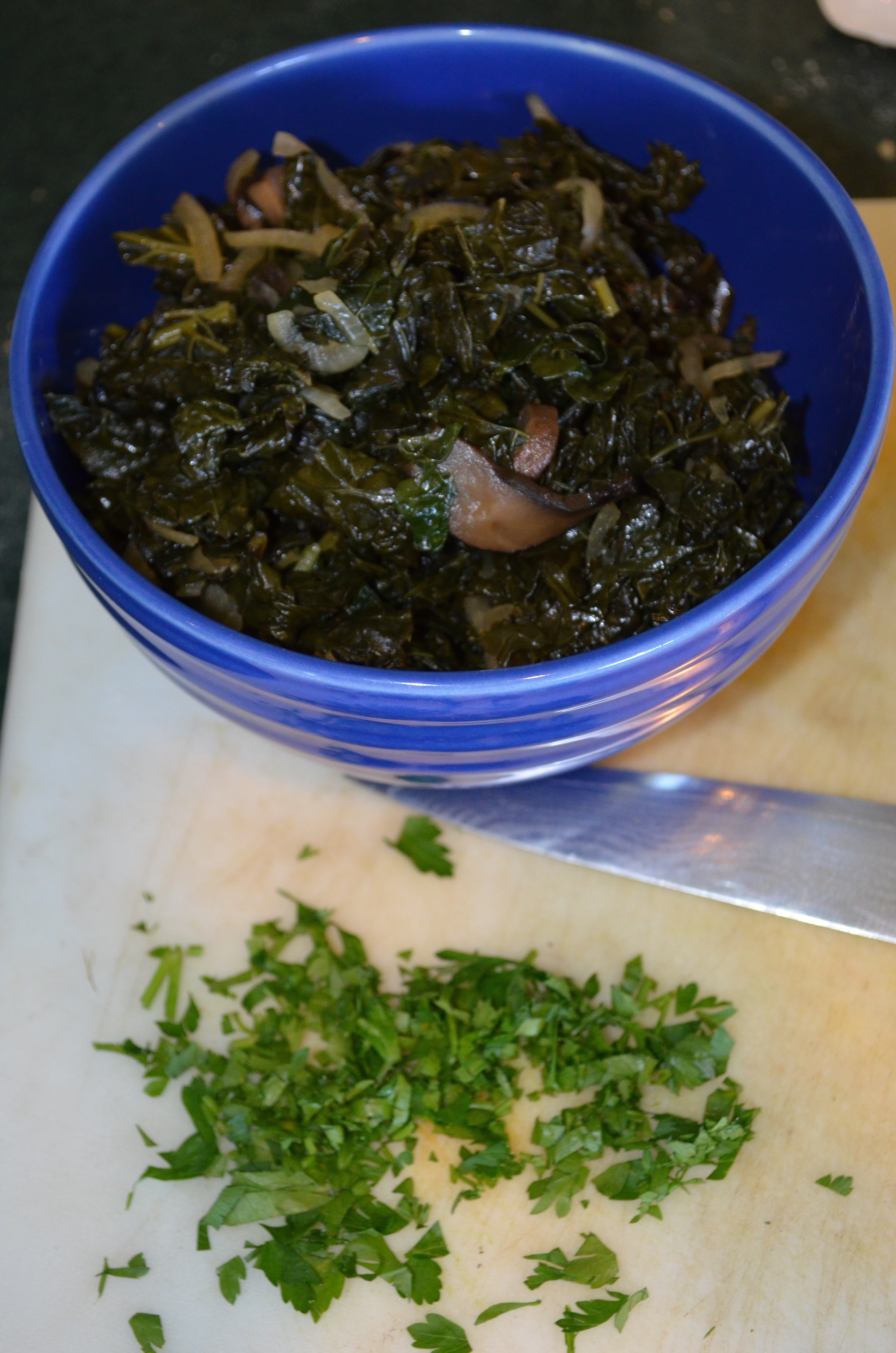
  • Other kale gurus will tell you to just braise it until its crisp-tender, but crisp tender kale still tastes raw to me. I braise mine for about 15 minutes, until it has turned a nice, dark green and is tender, but a bit chewy. Add more liquid if it gets dry. Season it with salt and pepper. Toss in the juice of a lemon or a teaspoon of white wine vinegar, or to taste. It ends up looking something like this:DSC_1015
  • You can use this kale for all sorts of things. Add it to marinara sauce for pasta. Toss it with chunky pasta (like penne) with a little high quality olive oil, chopped raw tomatoes, and toasted pine nuts or walnuts — This doesn’t need cheese, so it makes a nice vegan option. If you really need cheese, parmesan is good and gorgonzola is better. Use it to doctor up commercial bean and lentil soups. And, of course, it is an awesome pizza topping!

For the Rumpledepthumps, you’ll need:

  • 6 cups of diced potato (I like a mix of floury and waxy; leave some of the waxy potatoes unpeeled. If you are a baked potato fan, by all means, leave some of the flour potatoes unpeeled), cooked until tender (save some of the cooking water) and mashed with:
  • 2 TBS/25g butter or oil
  • 2 oz/125g cottage cheese (large curd is best)
  • 1 cup / 250 g mild white cheese (Monterey Jack or, in the Southern Hemisphere, Egmont works great here)
  • 1 TBS Dijon or coarse ground mustard
  • 1 large bunch of kale, preferably lacinato or blue / Russian, braised as per above (Curly kale is hard to cut into ribbons, but if that is all you have, you can chop it fairly fine — in this case, you’ll need to wash it first.
  • ½ medium head of cauliflower, broken into small flowerets and lightly steamed
  • 1 large or 2 small leeks, julienned or thinly sliced and sautéed in butter or olive oil until it is translucent. For a slightly sweeter, richer flavor, you can let the leeks caramelize a bit.

Mix the Kale, cauliflower, and leeks together with the mashed potatoes/cheeses; add a bit of potato cooking water or braising liquid if it seems dry.

Turn the whole yummy, gooey mess into a buttered 2qt/ 1.8 l casserole. Dot with a little more butter or olive oil, sprinkle with about  1 oz / 25g of shredded parmesan.

Bake in a 350F/180C oven until it’s piping hot and the cheese is lightly brown. That will take about 15 minutes if everything is fresh off the stove. Longer if it has cooled. This is even better assembled a few hours (or even a day) ahead. The flavors blend nicely, that way. It will take longer to reheat, and you’ll want to start off with it covered with foil: say, 15 minutes with foil, and 15 minutes without.

For a vegan/dairy free version, you can make a cream sauce for the kale:

  • Heat 2 cups of vegetable stock until it’s hot but not boiling (2 minutes on high in the microwave)
  • sauté a small shallot or 1/2 a small oinion, finely chopped, in 3 TBS olive oil or margarine (if you must) until translucent.
  • Whisk in 2 TBS regular flour and 2 TBS nutritional yeast and cook, stirring constantly, for a couple of minutes. It should be the consistency of wet sand.
  • Pour in the vegetable stock all at once and whisk like crazy until it is smooth. Then, bring it to a simmer and cook for a few minutes to let it thicken.

Add the creamy sauce to the kale, leave the cheese out of the potatoes (they might need some extra cooking water to get smooth), and proceed with the rest of the process. This version is good topped with a handful of whole wheat breadcrumbs and some finely chopped walnuts tossed with some olive oil and your favourite chopped herbs (rosemary, thyme, and chives are nice)– these will get nice and toasty while the Rumpledethumps bake.

In Search of the Perfect Pizza Crust: Part I

Sunday night was pizza night in our family. We started, in the early 1960s, with Chef Boyardee Pizza kits. The picture on the box showed a generous pizza with a cracker-thin crust, just the right amount of tomato sauce, and plenty of stretchy cheese. chefboyardeee03292011The reality was less inspiring – especially the powdery cheese-like-food product that came out of a can and tasted like vomit. But if you used only half of the overly salty sauce and added your own cheese, they weren’t too bad. We didn’t know you could put exotic things like sausage and olives on pizza. Mushrooms were a no go. Dad didn’t eat fungus. I think we did, sometimes, go wild and add hamburger. I vaguely remember slices of hot dogs, but I’m hoping that was just a nightmare.

So, my first visit to the Capri Pizzeria in Athens Georgia was the Big Bang of my pizza universe. The pies came on huge, battered old pizza pans – the size of trash can lids. And the crusts were life changing. They were crisp but chewy; and under the toppings, you’d find a lunar landscape of bubbles and craters.

Capri made their Italian sausage. It was a revelation. It had fennel seeds in it! FENNEL SEEDS! And the pizza was topped with real mozzarella and slightly smoky Provolone that made those long, stretchy strings that you see in the movies. We didn’t dine out much, and I can’t say my Dad was a great pizza fan. Fortunately, my mother and her best friend, Denise, loved the Capri’s roast beef sandwiches and went there often for lunch. Sometimes, if I was out of school, I tagged along. I cannot vouch for the quality of the sandwiches because: Why would you go to the Capri and NOT EAT PIZZA???!!! I don’t remember that the Capri sold pizza by the slice. But it must have, because I always had pizza. And I couldn’t possibly have eaten one of those massive pies by my scrawny lonesome. Then, again. . . .

Sadly, the Capri closed around 1980 or so. This catastrophe ushered in what I now know were to be my years of pizza exodus – wandering the pizza desert in search of manna (which, I’m pretty sure, the Old Testament describes as “as delicious as the perfect pizza crust). A Food Truck owner, Bob Petrillose, had invented the Poor Man’s (later French bread) Pizza in Ithica, New York in the 1960s. He licensed the idea to Stouffer’s, which introduced its frozen French Bread pizza to the American market in 1974. I don’t know precisely when Mom cottoned on to French bread pizza, but she was definitely an early adopter. But they weren’t cheap – and Mom was – so she explored various other options for putting tomato sauce and melted cheese on bread: frozen bagels (which qualify neither as bagels, nor as pizza crust), English muffins (Thomas’s are passable, if you are trapped on a desert island; otherwise, don’t bother), Bisquick and Pillsbury crescent roll dough (no comment).

My first exposure to Tombstone frozen pizza came during my trips to visit my family in Eagle River, Wisconsin, where Sunday night is also pizza night. My Auntie Anita has always been a culinary trailblazer in our family. My mother got her very first pizza recipe in, like, 1958, from Anita. Tombstone pizza was invented in Wisconsin, you see, so it was a patriotic duty. And because it was invented in Wisconsin, it was all about the cheese. Before it was mass-marketed across the US (after the original family company sold out to Kraft), it was only available in Wisconsin. If you ordered a pizza at a tavern or bar pretty much anywhere in Northern Wisconsin, what you got was a Tombstone. It was marketed as the next best thing to homemade:

 And in the pre-Kraft days, it sort of was.

Auntie always kept a dozen or so Tombstones in her freezer, ready for an impromptu “pizza doctoring” party. A proper pizza doctoring party – and, yes, you can do this at home – involves some key ingredients:

  • Coolers loaded with several suitcases of beer, preferably Old Style and Miller Light (or your local equivalent, cheap, quaffing beer), Diet Pepsi and A&W Root Beer for the kids. In later years, family beer preferences shifted to Icehouse and Budweiser Light (which, as far as I’m concerned, isn’t beer, but one humours ones relatives). Now that we are all grown-ups, we have also ventured into craft brews, such as Leinenkugel’s. And WINE!!

    can_12oz_24pk_suitcase

    This is a suitcase of beer. Not Old Style, but at least a Milwaukee beer.

  • Gin, vermouth (sweet and dry), brandy, Spanish olives (unless Auntie had some of her dilled green beans), and maraschino cherries so the grown-ups can make martinis and manhattans.
  • Several pounds of grated pizza cheese (Did I say Tombstones were all about the cheese? Well, not enough cheese for us!)
  • Peperoni, sliced mushrooms, ripe black olives, crumbled pre-cooked hamburger or sausage meat (because even had the Tombstones had enough cheese, they never had enough other stuff; and everyone wanted different other stuff.)
  • Dill pickle spears
  • Potato chips
  • Lots of Aunties, Uncles, Cousins, Cousins-in-law, and other assorted hangers-on
  • An oven
  • Scissors (to cut the pizza; we never had anything as flash as a pizza wheel)
  • Oh, and lots and lots of Tombstones.
CCI26092015

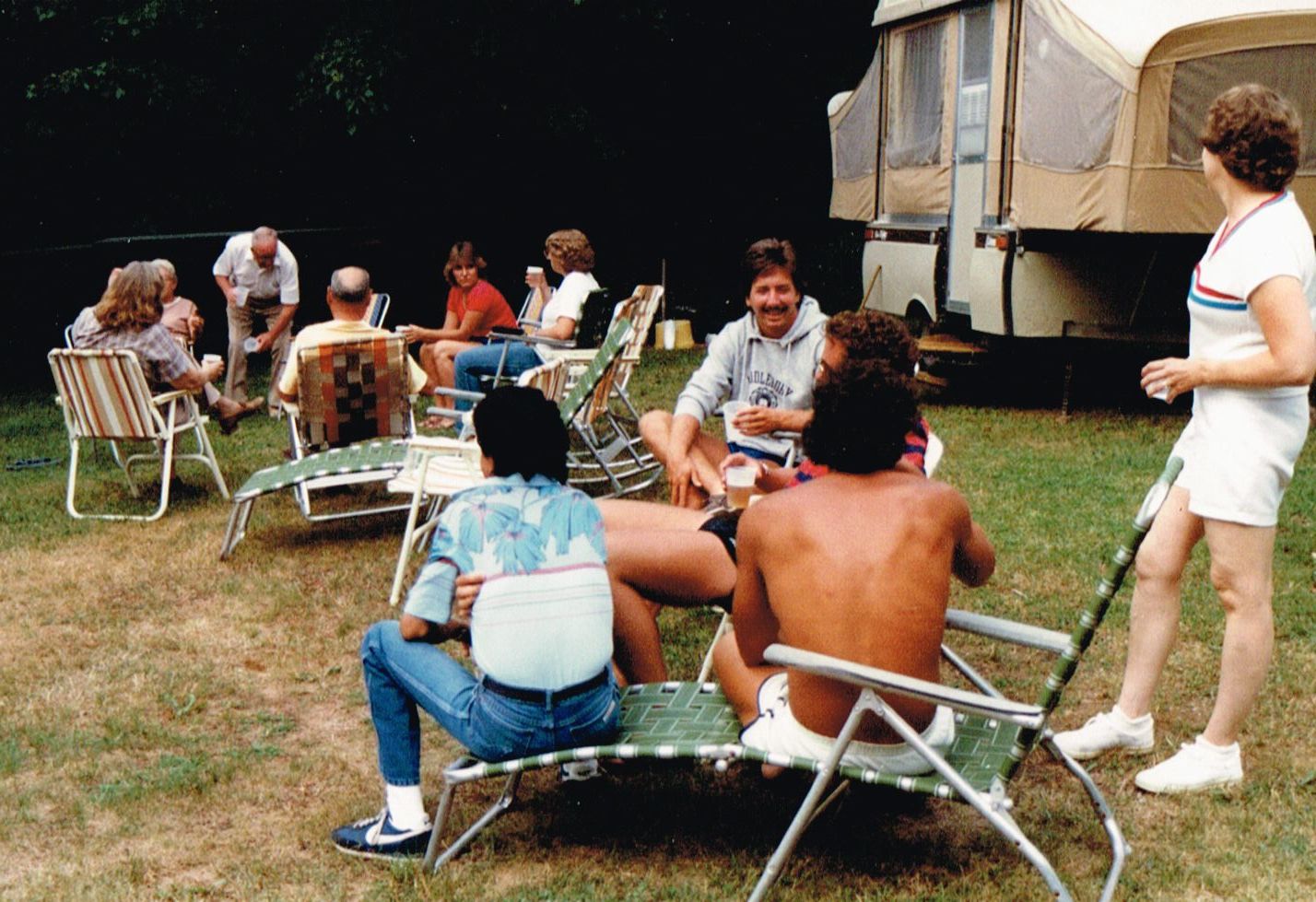
I cannot swear that this was actually a pizza doctoring party. The vintage (1980s) is right, however, as is the general vibe.

Do I really need to tell you what to do next? OK:

  1. Open a beer, or
  2. If you were born before 1945, wait for Earl and Chuck to mix the martinis and brandy manhattans
  3. Open a Tombstone, add additional toppings as desired, but at the bare minimum lots and lots of extra cheese,
  4. Open another beer,
  5. Bake the Tombstone according to package directions, or until your toppings are nice an bubbly
  6. Listen while Cousin Randy tells hysterical bear hunting stories
  7. Let the Tombstone cool briefly, then cut into slices with the sewing shears,
  8. Grab another beer
  9. Eat with pickle spears and chippies until you can’t move.

Dill pickles? Potato chips? Yes. Tombstones need dill pickles and potato chips. There is debate in our family as to who established this rule. The smart money is on my Mom. Maybe the Eagle River clan has been goofing me all these years, and when I’m not around, they leave out the pickles.

*********

This week’s slice: Dill Pickle and Potato Chip Pizza

IMG_0123

The inspiration for this pizza is two-fold. First, a few years ago, my Auntie J gave me a raclette grill for Christmas. Simon and I enjoyed raclette, which is an excellent excuse to eat potatoes, pickles, sweet onions, and lots and lots of melted cheese. I had to rehome the raclette grill when we moved because, as I did all my other electric appliances. So I felt a pang of homesickness when I discovered that the Stinky Cheese Man at the farmers’ market had raclette cheese. Why not, I asked myself, put the raclette ingredients on a pizza? Genius!

Second, genuinely sour, dilly, kosher dill pickles (the only pickles really worth eating) are rarer than hens’ teeth in New Zealand. The closest approximation to the flavor of dilly pickles is French cornichon, or gherkins, which are available here. But they are tiny, difficult to pick up, and generally ill-suited to the role of side dish pickles. They do, however, look pretty adorable on a pizza, and complement sweet onions (or in this case, leeks) and new potatoes that all cuddle up under a layer of nutty raclette cheese. And with the potatoes, there is no need for chips on the side!

Raclette Pizza

500g (1 lb.) smallish new potatoes(about the size of a chicken egg), red or gold

1 large or two small leeks,

12 or so sour gherkins or cornichons

120g (1/4 lb.) raclette cheese (or any mild swiss cheese)

225g (1/2 lb.) grated mozzarella

olive oil, salt, and pepper

Crust for a 30cm (12 inch) pizza

Preheat your oven to 220C or 425F

  1. Thinly slice the potatoes and soak them for 30 minutes or so in ice water. If you slice them very thin (3mm or 1/8 in.), they will be potato-chippier; if you slice them a little thicker, (4.5mm or 3/16 in.) they are more like the boiled potatoes common in raclatte spreads. I like them both ways, depending on my mood.

    I slice the potatoes and leeks on my mandolin. If you do that, try not to do this!

    I slice the potatoes and leeks on my mandolin. If you do that, try not to do this!

  1. Drain the spuds and dry them as best you can (I give mine a ride in the salad spinner), drizzle a little olive oil on a foil-lined baking sheet, and spread the slices out in a single layer (or as close as you can manage, they’ll shrink a bit) and smoosh them around in the oil a bit, and sprinkle them with salt.
  1. Roast the potatoes for about 20 minutes. Turn them over (or just stir them around) about halfway through. When you take the potatoes out of the oven, nicely brown and crispy, turn the oven up to 260C or 500F.
  1. Slice the leeks, white and light green parts, crosswise, very thin. Alternatively, you can cut them lengthwise into thin shreds. Sauté them in a Tbs. of olive oil, sprinked with a bit of salt, until they are tender but not browned.
  1. Top your pizza (I always start with a slightly prebaked crust):
  • start with the grated mozzarella (I use mozzarella for the base because raclette cheese is pretty $$$, and your run of the mill mozzarella won’t compete – try not to use “pizza cheese”, which usually includes some provolone, fontina, and parmesan, which might distract from the nutty, Swiss cheesy flavor of the raclette).
  • Then add the sautéed leeks in an even layer
  • Then arrange your roasted potato chips artistically on top of the leeks.
  • Dot the pizza with gherkins. If they are very tiny, you can use them whole. I cut the bigger ones in half.
  • Finally, spread the raclette cheese over the whole thing, because it is the star.
  • If your crust is prebaked, bake the pizza for about 8 minutes. If you are starting with a raw crust, then you’ll want to leave the gherkins and raclette off for the first few minutes, and add them when you have about 7 or 8 minutes to go.

Home

New Zealand is my new home. I felt at home here almost from the start. Kiwis get my sense of humor in ways that my fellow Americans never did. Simon and I can live 20 minutes from the center of the nation’s capital and keep pigs, alpacas, and (coming soon), chickens. Work-life balance is a real thing here, not just an aspiration. It is possible to drive from our home in the hills to the beach in 20 minutes or less. Almost nobody here goes back to work on January 2nd. New Zealand is closed in January. The January “blahs” that used to knock me sideways every year just aren’t a thing.

There has been much to learn: driving on the “wrong” side; the metric system; Kiwi English; spelling; that horizontal rain makes umbrellas pretty much pointless; that July isn’t summer, and January isn’t winter; that there are 18 hours of daylight on Christmas and 8 hours of daylight on the 4th of July; the rules of cricket; that the number 10 is pronounced “tin” while 7 is pronounced “seevin.” Footy games are “matches”, the field is the “pitch”, and it takes rugby players roughly 80 minutes to play an 80-minute match. And there are no TV time-outs, special teams, shoulder pads or helmets. So you’d better have your beer and chips ready before play starts.

New Zealand is my home. For me, though, the notion of home is bit slippery. You see, I have many “homes” in places where I’ve never actually lived. In addition to my actual homes (Virginia, Georgia and Wisconsin, New Zealand), I get homesick for, inter alia: New Orleans, Edinburgh, Paris, the Masai Mara, and Antarctica. In pondering how this is possible, I’ve come to understand for me, “home” is about memorable experiences and the people with whom I shared them.

And I remember those experiences in terms of food.

I discovered my love for jazz and zydeco over coffee and biegnets with my parents at the Café du Monde. My friend Anita and I kicked off a long-weekend sharing our love of art with glasses of red wine and the best omelets ever for breakfast (well, an early lunch) at a sidewalk café on the Rive Gauche after an all-night flight to Paris. My two chosen sisters – Susan and Elizabeth – and I ate great piles of mussels and chips (but not haggis) after exploring ruined castles in Scotland, and drank gallons of vino verde in the hot, dusty Alentejo in Portugal. I ate delicious grilled langoustines in Bali while my venerable Elder Sister, Katy, fed her grilled fish to the street cats. Simon and I drank gorgeous Argentine and Chilean wines while watching the penguins and icebergs in Antarctica. And I reveled in quaffing Tusker beers with my fellow campers after a hard day tracking wildlife with my intrepid Masai guide, Josh, at Freeman Safaris in Kenya.

In fact, sharing memorable meals is, for me, the way I end up expanding my chosen family. Conversations and experiences can create acquaintances, but for me, breaking bread creates family. And family is home.

Taste is my most evocative sense. Music is a distant second. Christmas isn’t Christmas until I’ve had one of Auntie Janice’s nutmeg logs and a slice of my mother’s stöllen. Passion fruit (a key ingredient in New Orleans’ famous hurricane cocktail and also popular in New Zealand) makes me hear Dixieland jazz and zydeco. My cheese and nut loaf evokes Thanksgiving dinner with Pete, Anita, Mike and Mary Beth, even in New Zealand in July. Peaches take me take me back to the battered old formica kitchen table at my grandparents’ farm where Tanta comforted me with peach küchen after a run-in with the wasps in the outdoor privvy. Every time I eat oatmeal, I hear Grandpa Saltenberger saying: “If you don’t eat your oatmeal, you won’t grow hair on your chest.” Somehow, that arugment worked for him: I ate the oatmeal. It never occurred to me, at 7, that I might not want hair on my chest.

Not all the memories are happy. I was eating baklava the moment my appendix ruptured, and I still can’t face the stuff. When I was about 6, I ate whipped cream until I was sick (they warned me), and it still gives me pause. At about the same age, I went to the fridge and took a big slug out of what I thought was ice water. It was martinis. Please, never order me a martini! And tuna casserole will forever take me back to the hours and days I spent by my father’s bedside when he was dying in hospice.

1069140_10151793653433410_1120628792_n

Dad’s winter greenhouse, circa 1969.

With absolutely no disrespect to my loving and all-around-wonderful mother, my Dad was (and remains, eight years after his death) the center of my universe. He was a World War II veteran, a brilliant scholar, and a venerated teacher. But in his heart of hearts, he was a farmer. Not a gardener – he had no truck with roses or posies. That was my mother’s realm. He grew food. Every summer we drowned in bell peppers (capiscums), green beans, snap peas, shelly beans, okra, eggplants, radishes, spinach, and lettuces. He even grew summer squash (courgettes) – crooknecks and zucchini – even though he hated it, because he knew I loved it. Half of the back yard was covered in raspberries – because Mom loved them. His fig tree was legendary – it was the fig tree equivalent of the loaves and fishes. It fed the ten thousand hungry southerners with figs. And with my mom’s famous fig pizzas. Yum.

But what I most associate with my father and, hence, with love and family, is tomatoes: his huge, ugly, sweet, juicy heirloom tomatoes. When I moved away from home, he would pick them green, wrap them in newspaper, and ship them to me. One bite of a vine-ripened tomato, warm from the sun, transports me right back to summertime Saturday afternoons, when we three sat down with a couple of big, fat tomatoes, a jar of mayo, salt, pepper, and a loaf of squishy white bread – no lettuce, no bacon – and ate tomato sandwich after tomato sandwich, washed down with unsweetened grape Kool-Aid. I’m sure, when I die, my last thought of my father will be those tomato sandwiches.167185_10150125454908410_190088_n

I only know how to tell my story, and my family’s story, through food. Family, love, life, and home are all embodied, for me, in food: in the making of it and the sharing of it. In this blog, I will share what I have learned about living and cooking as a vegetarian, and living and cooking as a vegetarian in New Zealand. I will also share my stories: the ones I remember from my past homes and the ones I am making here in my new home. Some are funny, others are sad. All are, for me, full of the kind of meaning that makes ordinary food a meal, makes meals into memories, and makes memories into home.

The Making of a Kale Whisperer, Part I

On 2 August 2013, at the age of 55, I entered New Zealand as a new migrant.

Five years earlier, I met the love of my life on a train crossing the Nullabor Plain – 2,300 miles of mostly nothing in the Australian outback. The trip was an homage to my train-buff Dad, who had died of Alzheimer’s a few months earlier. Before I left the States, my mother, fretting as she always did before one of my many work-related trips, said she just knew I was going to meet someone and move to the other side of the world. “Mom,” I replied, “You’re worrying about nothing. No one really travels halfway around the world to meet the love of their life on a train. That only happens in movies.” Famous last words.

Simon was living in Invercargill, on New Zealand’s South Island. Leave it to me to find a soul mate who lived as far away from my home and job as geographically possible. After a brief courtship consisting largely of sleepy, 5am trans global phone conversations, we navigated the treacherous frozen terrain of ICE (Immigration and Customs Enforcement), secured a fiancé visa for Simon, and married on Waimanolo Beach, Hawaii in July 2009 – almost exactly a year after we met. Shortly before the wedding, my mother passed away leaving me – an only child – a rootless orphan.

Simon is an ethical vegetarian. He hasn’t eaten meat or worn leather for most of his adult life. I’m a slacker vegetarian. I like the idea of living “cruelty-free,” but over the years I’ve lost the plot, done in by convenience (it is easier to grab a burger and fries at MacDonald’s than to cook vegetarian meals in an electric kettle in the graduate student dorm), travel (how can I say no to a platter of fried fish heads or roast goat offered in a spirit of hospitality by Palestinians or Africans who barely have enough to eat themselves), genetics (I’m part German and part Italian: sausage is in my blood!), and, of course, the universal bane of vegetarians everywhere – BACON.

Wee Charlie, one of our kune kune pigs.

Wee Charlie, one of our kune kune pigs.

[Now that I am the proud mother of three kune kune pigs, I wouldn’t even think about eating bacon. Really, Wee Charlie, I promise!] Since my first husband and I decided to go veg after reading Frances Moore Lappé’s Diet for a Small Planet, in 1982, I reckon I’ve lived about half of the time as an herbivore.

While I have not always been a vegetarian eater, I have – for the most part (excluding the odd bit of bacon thrown into a nice mess o’ greens) – been a vegetarian cook. Again, I can’t claim the moral high ground. I just prefer to cook vegetables. Raw chicken gives me the creeps. While I do occasionally eat seafood, the only thing I know to do with a raw fish is Monty Python’s fish-slapping dance. My bestie, Susan, taught me to cook live lobsters; but if I cook them, I can’t eat them. And I usually cry. I grew up in terror of dying horribly, consumed by worms, as a result of undercooked pork. I haven’t even thought about eating beef since I saw those slaughterhouse videos – you know the ones. Offal? We won’t even go there. [Although I accidentally ate sweetbreads once, at a three star restaurant in France, when my French companion translated ris de veau, misleadingly vaguely, as a special cut of meat. I resolved, on the spot, to learn French.]

Over the years since I bought my first vegetarian cookbook (Mollie Katzen’s The Moosewood Cookbook), I’ve developed into a competent and, I think, creative vegetarian cook. I’ve taken cooking courses to master the basics, and spend almost as much time reading cookbooks as I do reading detective novels. Liberated from the tyranny of recipes, I can go to the farmers’ market, buy what looks fresh and beautiful, and turn it into something good to eat. I embrace the challenge of creating meat-free versions of classic comfort foods and pub grub. And PIZZA.

DSC_0682

All our worldly goods packed into a shipping container in Annandale, Virginia to make the long voyage to New Zealand.

By the time Simon and I married, I had become disillusioned with my career as a Washington, DC-area policy analyst. In the midst of what had become increasingly common collapses in my professional morale, I would joke (usually after my second or third glass of wine) that, perhaps, I should just quit my job and write a pizza blog. Instead, I decided to move to New Zealand to try my hand at education. In the ensuing, not always pretty and, ultimately, disastrous process of discovering that tertiary education is definitely not my calling I discovered that food is.

So, in the space of two years, I’ve come from being a defense analyst with a six-figure salary, to being an academic with a five-figure salary, to end as an amateur vegetarian cook and part-time food blogger with a zero-figure salary. I live on the top of a hill with Simon, three dogs, three pigs, six alpacas, and uncounted Tuis, geckos, hedgehogs, and the occasional morepork.

I’ve never been happier.

The Making of a Kale Whisperer, II

Not surprisingly, pulling up stakes and moving to the bottom of the world has presented some personal and culinary challenges. It was easy to be vegetarian in Virginia, as long as I remembered to take detours around the most tantalizing barbeque joints. Most restaurants had a variety of vegetarian options. The frozen food section in most grocery stores had extensive vegetarian sections, with a plethora of vegetarian meals and play-meats. And the rise of “foodie” culture meant, if you had the dosh, there were plenty of sources of fine and exotic produce and vegetarian staples either close to home or a few clicks away on the Internet.

New Zealand is more challenging. True, most restaurants here offer at least one vegetarian option, but that option almost always involves one of two alternatives: make lasagna, take out the meat and replace it with kumara (sweet potatoes), or make lasagna, take out the meat and replace it with pumpkin (the generic Southern Hemisphere term for the entire family of winter squash). If, as Simon and I both do, you dislike sweet potato and/or pumpkin (unless it’s in a pie, and then, only on Thanksgiving), you are out-of-luck. Our local paper once ran a piece about a shop in a nearby town that made the best kiwi pies in New Zealand (and that’s saying something). The next time I was passing through, I stopped to check it out. “Do you have vegetarian pies?”, I asked, hopefully. “Yes: savory kumara and coconut.” Three words that, as far as I’m concerned, have no business being in the same phrase. There are plenty of Indian and Asian restaurants. For the first few weeks we were here, while I was shell-shocked and drowning in my new job and Simon was busy arranging for us to buy a house, we lived off of Thai and Indian takeaways. New Zealand’s deservedly famous Hell’s Pizza has some quite good vegetarian pizzas, but week after week of eating the same couple of combinations got old.
What New Zealand has in abundance is farmers and, as a result, awesome farmers’ markets. [Oh, and vineyards, but we’ll get to that in future posts.] I am a regular at the year-round Saturday morning Riverbank Farmers’ Market in the Hutt Valley, where I can buy reasonably-priced, fresh fruits and vegetables, raw honey, free-range eggs, crunchy baguettes, manuka-smoked garlic salt, sheep milk feta, fresh Thai herbs, New Zealand olive oil, handmade extra-firm tofu, chewy Chinese noodles, lovely Stewart Island smoked salmon (yes, I know, salmon is not a vegetable: mea culpa) and used paperback books and one-dollar DVDs.

There are some up sides. In northern Virginia, if you are lucky, you can get fresh-picked local asparagus for about three weeks between the last frost and the first 90 degree day, when the stalks bolt and become inedible. The season for lovely, tender,DSC_0949 if somewhat bent (it’s very windy here in the springtime) Levin asparagus lasts at least two months, sometimes longer. Ditto: strawberries. So, it is possible to be a confirmed locavore and ethically serve asparagus and strawberries for Christmas dinner.

On the other hand, okra is not really a thing here. Neither are collard greens, heirloom tomatoes, jalapeno or poblano peppers, fresh Asian mushrooms, white field corn, spaghetti squash, shelly beans, or turnips – what they call turnips here, I call rutabagas, and they don’t come with greens. One of New Zealand’s favorite vegetables is silverbeet, a sort of nuclear-mutant version of white chard. It is a lovely, slightly sweet green – flavor-wise, a cross between spinach and beetroot. It is lovely, but it isn’t chard. I haven’t seen durian here, either, but, to be honest I wasn’t looking.

So, what’s a Southern girl to do, adrift in the Antipodes without her collards? The answer: kale. Over the past two years, kale has emerged from oblivion at the Riverbank Farmers’ Market. And I buy it in abundance: Tuscan, Russian, blue, and good old-fashioned curly green. On the rare Saturday when the beetroots come with the greens attached, I go nuts.

I assumed no one paid any attention to how much kale I bought. Then, one Saturday, the smoked salmon lady asked me what I do with all those lovely greens. “Do you make smoothies? That seems to be what everyone else does with them.” Gasp! Why would I take a gorgeous bunch of lacinato kale, throw it in a juicer, and turn it into something that tastes like steeped compost? A seed of a new calling took root in my mind – I would spread greens enlightenment.

A few weeks after my conversation with the smoked salmon lady, I was at the Asian greens stall where I buy most of my kale when I overheard a conversation that went something like this:

Asian lady to Asian farmer: What is this?

Farmer to Asian lady: It’s kale.

Asian lady: How you cook?

Farmer: I don’t know. I think they make it into juice.

Maori gentleman: It’s an American thing. It’s real popular in the States.

His Pakeha (Caucasian) companion: Yeah. I hear Americans in the South really like their beans and greens.

Me: I resemble that remark! I’m an American, from the South, and I live for greens! Greens are my life!

Asian lady, Mrs. Maori, and Mrs. Pakeha: How you cook?

The Kale Whisperer was born.