Zhen Kailian Won Ton Soup: A Forty Day Invention Test, Episode Six

Last Wednesday, I woke up with a bit of a throat. Nothing big, just one of those fizzy, back of the throat tickles that could be allergies or could be the beginning of a cold. The kind of sore throat that makes you crave chicken noodle soup, or a vegetarian equivalent. Fortunately, I had some homemade, Saturday morning after the Market vegetable broth in the freezer. IMG_0249That could stand in for chicken stock, but what about the noodles?  That’s when I hit upon won tons. I’d had dumplings on the brain since I made pot stickers for Chinese New Year. Some yummy won tons in a slightly Asian-ised vegetable broth with a few fresh veggies and lots of tummy-settling ginger would satisfy my desire for throat-and-soul-soothing, brothy soup while constituting a sufficiently hearty meal for my hardworking sweetie.
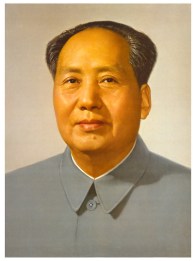
What, you might ask, qualifies me — an ageing white chick from the Deep South of the US living in New Zealand — to improvise Chinese soup? Well, first of all, I had a poster of Mao Zedong tacked to the ceiling over my bed throughout my teenage years. Why, you ask? Probably for the same reason I wore a dog collar all through High School: to annoy my parents, to get attention without actually DOING anything. My rebellion was pretty wimpy. I also own and have actually read The Military Writings of Mao Tse-Tung and Sun Tzu’s The Art of War, relics of my Ph.D. studies.Mao
Second, I took — and survived — two semesters of Chinese History at the University of Georgia. The professor, Dr. Thomas Ganschow, was recognised as one of the very best teachers at the University of Georgia. He was also renowned for his marathon exams, the undergraduate equivalent of the Mandarin Eight-Legged Essays, for which the questions were sort of : write down all human knowledge. Be specific and include dates. Tom was the main reason I finally realised resistance was futile: I would be an historian. He also launched me on my lifelong quest to understand how other cultures work. My Dad continued to hold out for accounting in the hope that I might, someday, be gainfully employed.

Tom and his lovely Taiwanese bride, Lisa, became good family friends over the years. Lisa was the manager of the Athens Area Community Food Bank, where my mother volunteered as a board member and Thank You Note writer. Really, everyone who donated food or money to the Food Bank got a handwritten Thank You from my Mum. The Thank You Note is a lost art, leaving the world a less gracious place. Lisa is also a fabulous cook. Before my first wedding, some of Mum’s friends threw me a Recipe Shower. Lisa gave me her recipe for Chinese Egg Rolls. I cherished it. I still have it. In fact, I think I will dig it out and work on a vegetarian version. Watch this space!

I have been to China twice, both times for work. Because I was not allowed to take any technology — no smart phone, no laptop — into China, I actually got out and did things instead of staying in my hotel catching up on work, which was too often what I ended up doing on work trips. On my first trip I visited the Great Wall and the Forbidden City and met Helmut Kohl, despite my falling victim to fairly paralysing food poisoning. I was at the Great Wall on the hottest day in human history. It was 114F/45C. Honestly! I was the only person insane enough to be up there in such weather. It was so hot my hair turned bright orange! Between sweat and food poisoning, I lost about 5 kilos on that trip!

On my second trip, I had the unique “pleasure” of being stuck in a parked aircraft on the ground while Beijing had a rare, early November blizzard. The snow plows were still in dry dock. But the snow did, temporarily, sweep away Beijing’s legendary air pollution, so I woke up the next morning to the truly once-in-a-lifetime spectacle of Beijing under clear, sparkling blue skies!

My adopted Elder Sister, Kongdan Oh Hassig, a Korean China expert and linguistic whiz kid, gave me a Chinese name for my 50th birthday. Zhen Kailian means “triumph” and “lotus flower.” CCI22032016I love that. Triumph means so much to me, given my lifelong war of attrition with depression and anxiety. And the lotus flower symbolises, according to buddhist.org, “rising and blooming above the murk to achieve enlightenment.” My next tattoo will be a lotus flower.

Note to Katy: my reputation is in your hands. If Zhen Kailian actually means “Old Lady with Baggy Knickers,” it’s on you!

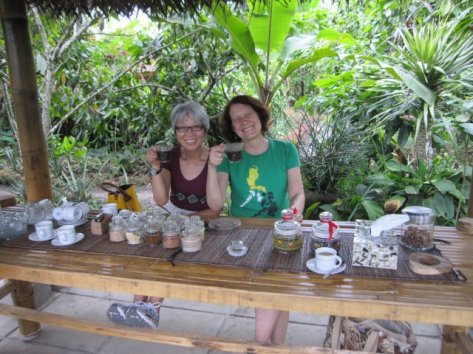
Katy and I traveled together a lot. She is fearless and up for just about anything. Sadly, we have never been to China together, although we did drink civet poop coffee in Bali.299900_10150433922303410_1665493123_n
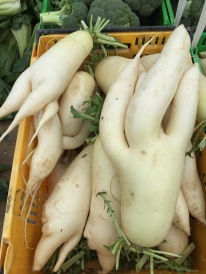
Finally, some of the most interesting foods I find at the Riverbank Farmers’ Market are Asian: the beautiful Asian greens, giant daikons, strange and wonderful bitter melons, snake beans, and snow peas. Then there is the Thai herb lady who sells all kinds of Asian flavour makers: Thai basil, lemongrass, galangal, and turmeric root. And the Chinese gentleman with his handmade tofu and fresh Chinese noodles.IMG_1267
And last but not least, the “I Love Dumplings” ladies serve up the most delicious vegan potstickers ever.  My last stop every Saturday morning is at their stall, where I buy a dozen dumplings for $5. Sometimes they are so busy, I have to wait. And I do. Because the dumplings are just that good. Simon and I arm-wrestle for them for the rest of the day. I could get 25 dumplings for $10. Every week I consider this option, only to conclude that there can be too much of a good thing. But I don’t believe that. Some Saturday in the future, I’ll probably give in to temptation. But not this week. Their dumplings provided the inspiration for my won tons.

So, armed with these questionable qualifications, I set out to invent a delicious and healing won ton soup that would be 1) edible, 2) not insulting to Chinese cuisine, and 3) worthy of the name Zhen Kailian. What I came up with was pretty darned tasty, if I may say so myself.

Zhen Kailian Won Ton Soup

Ingredients: For the Won Tons

200g / 7 oz extra firm tofu

1/2 small napa cabbage, finely chopped, (about 1 lb / 450g)

1 TBSP grated fresh ginger

3 shallots, finely chopped

2 cloves garlic, minced or put through a press

1/2 0z / 15 g dried shitake mushrooms, soaked in 1 cup / 700 ml) boiling water

2 TBSP / 3 ml white sesame seeds

2 TBSP / 3ml soy sauce

24 fresh wonton or gyoza wrappers

1 egg white, beaten to soft peak stage (optional)

For the Broth:

6 cups / 1 1/2 liters vegetable broth, preferably homemade, definitely low-salt

2 pieces dried kombu (optional, but nice)

a thumb-sized bulb of fresh ginger

2 cloves garlic, peeled and cut in half

leftover mushroom soaking water

2 glugs (about 1/4c / 60ml) low-sodium soy sauce

1 glug (about a TBSP) toasted sesame oil

For the Soup:

Broth

1 large carrot, thinly sliced on the diagonal

1 stalk celery, also thinly sliced on the diagonal

a handful of greens, I used thin ribbons of kale, but baby bok choy would be nice, too

Steamed Jasmine Rice, optional

thinly sliced scallions for garnish

Let’s Make Soup:

Set the broth on to simmer at very low heat with the kombu, ginger, garlic and mushroom water. Give it at least 30 mins, but an hour plus would be OK, too.

To make the wonton filling:

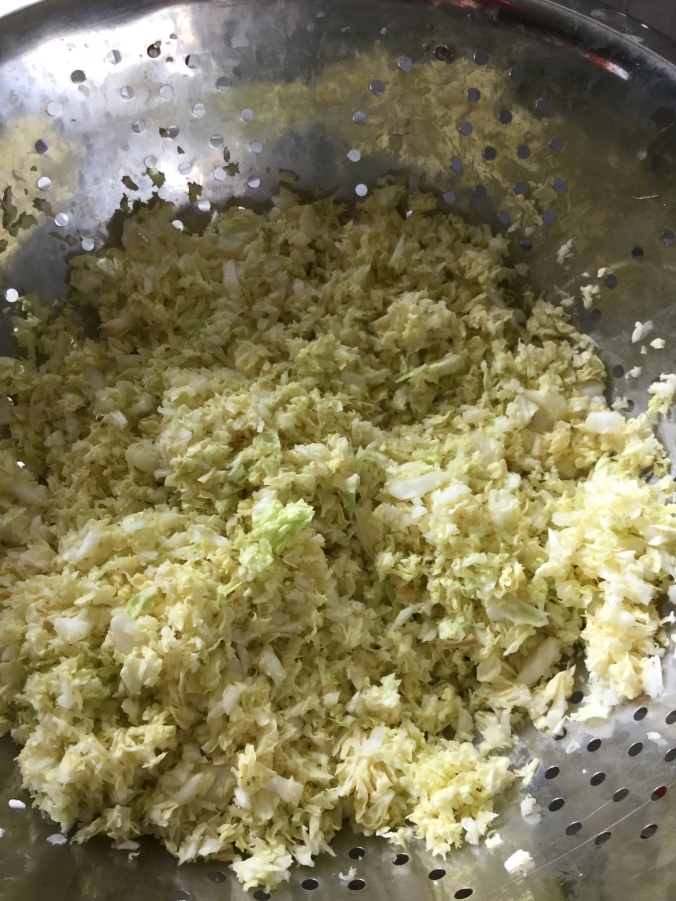
  1. Toss the finely grated cabbage with some salt (a big pinch) in a colander and let sit for  an hour or so to drain. If you are careful with the salt, you shouldn’t need to rinse the cabbage, but taste it just in case, to ensure that it isn’t too salty.IMG_0372.jpg
  2. Squeeze out as much liquid from the cabbage as you can, then roll it up in a tea towel and squeeze out even more. The cabbage should be really dry. IMG_0376
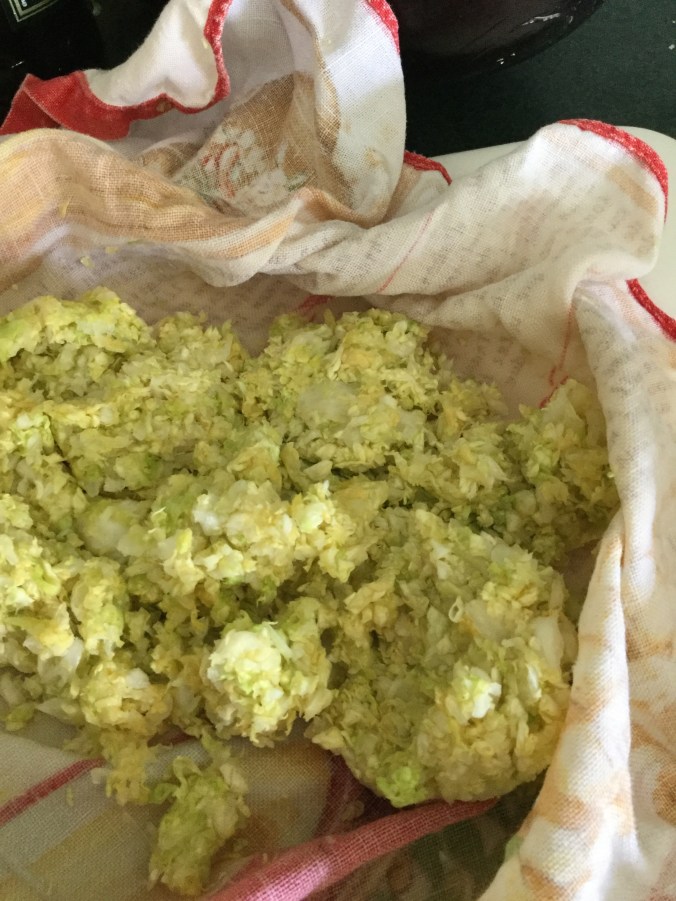
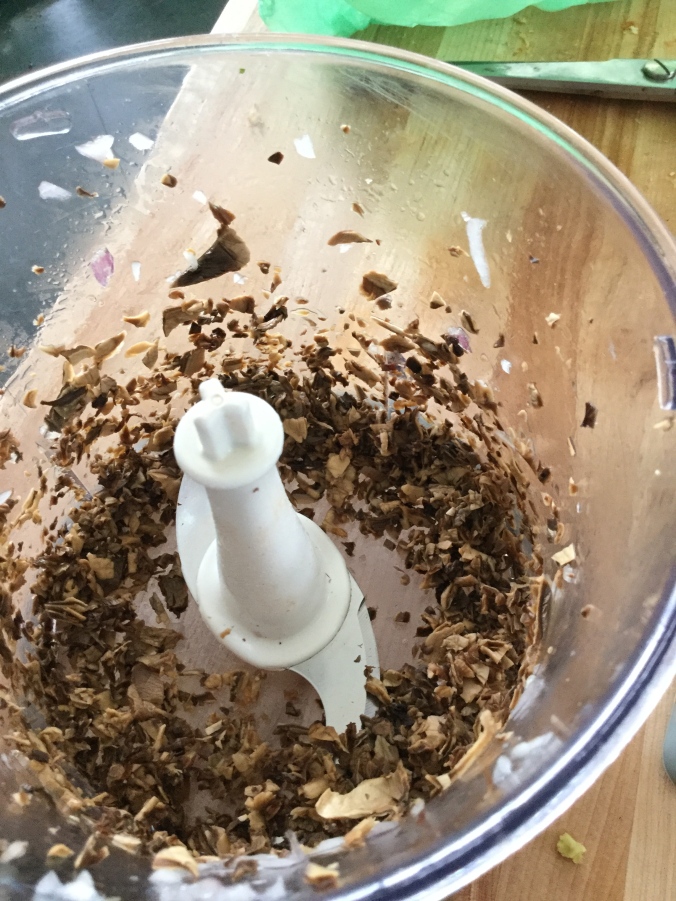
  3. Drain and finely chop the mushrooms.IMG_0375
  4. Chop the scallions and garlic and grate the ginger.
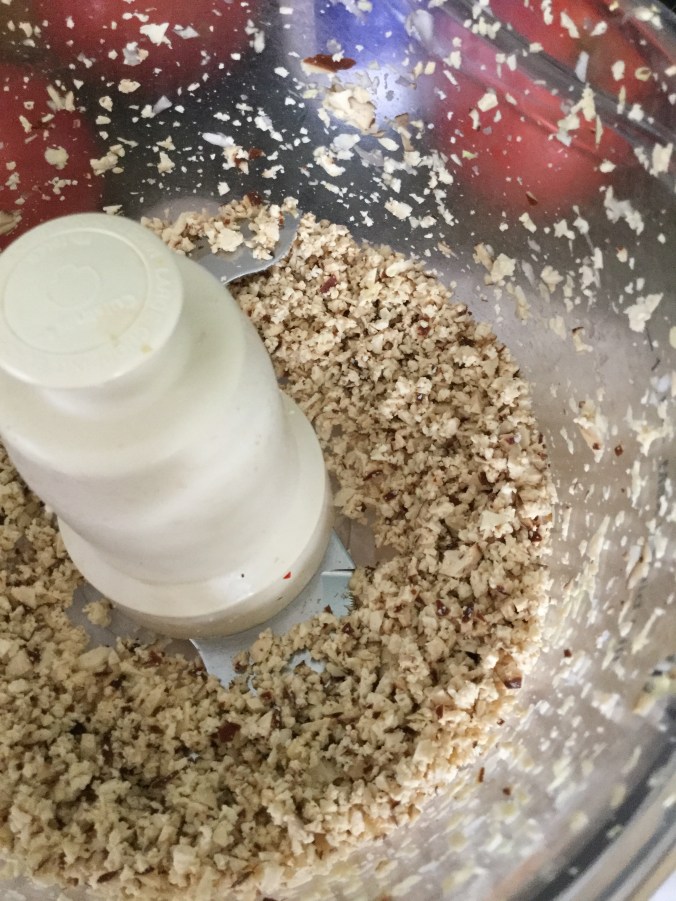
  5. Either dice the tofu (I used sesame marinated tofu) or chop it in a food processor.IMG_0373
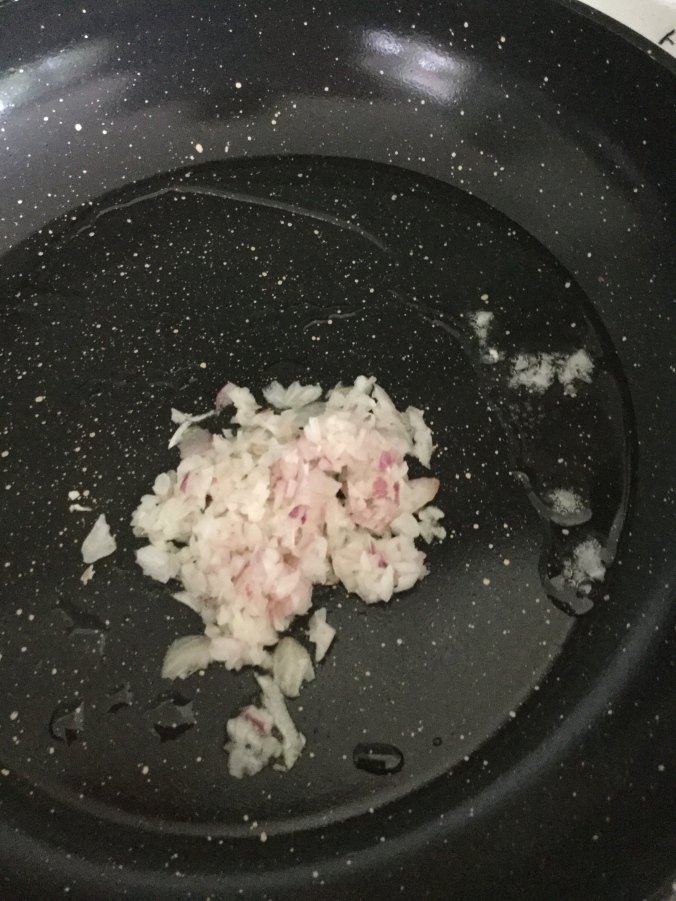
  6. Heat about a tablespoon of neutral oil, preferably peanut oil, in a medium skillet and sauté the shallots until they are getting brown and crispy.IMG_0374
  7. Add the garlic, ginger, and chopped mushrooms and sauté for a couple of minutes.
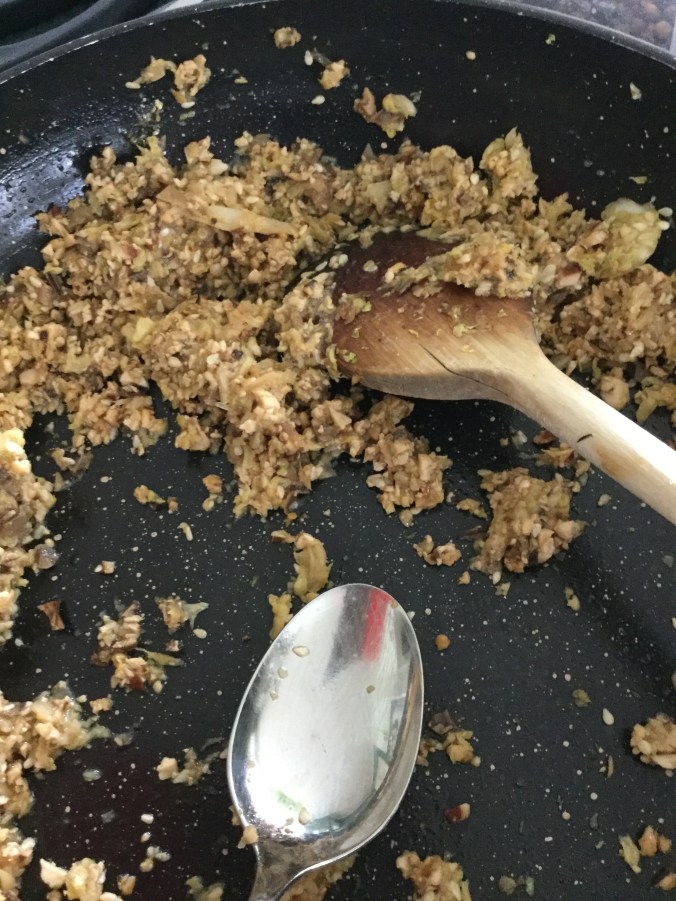
  8. Then, add the diced/chopped tofu and sauté until it starts to get brown and crispy.
  9. Add the cabbage and sauté until it is wilted and dry.
  10. Take the filling off the heat and add the soy sauce and sesame seeds.
  11. When the filling is cool, fold in the beaten egg white. If you want your won tons to be vegan, you can leave this out. The egg white sort of puffs up when the won tons cook, so they are fluffy, but this is a purely aesthetic thing. If you don’t mind dumpy dumplings, leave out the eggs!IMG_0378
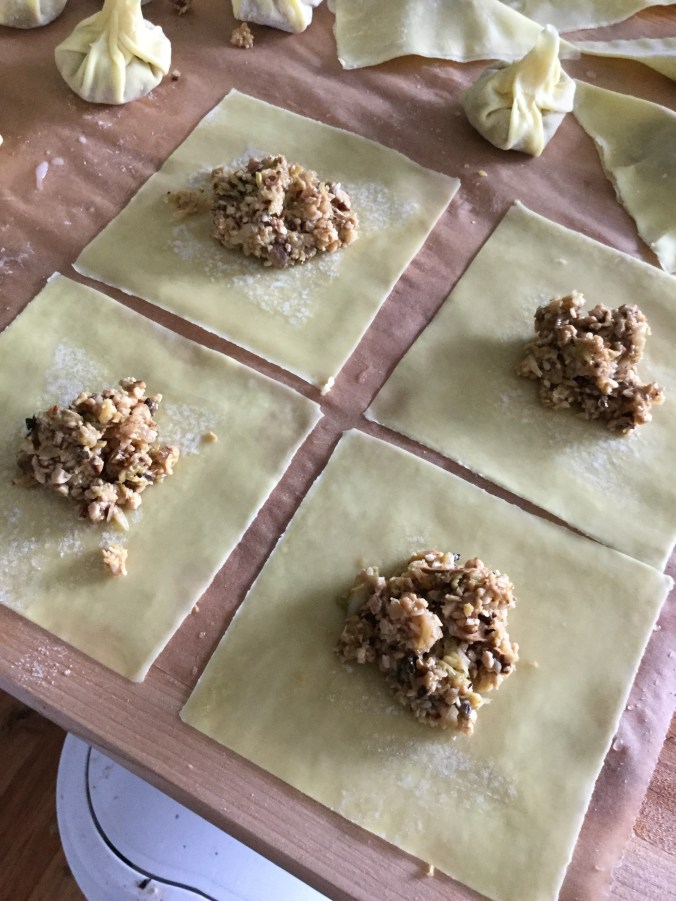
  12. Lay out your dumpling wrappers. Put a generous tablespoon of filling on each one, then brush the edges with water to seal them.IMG_0380
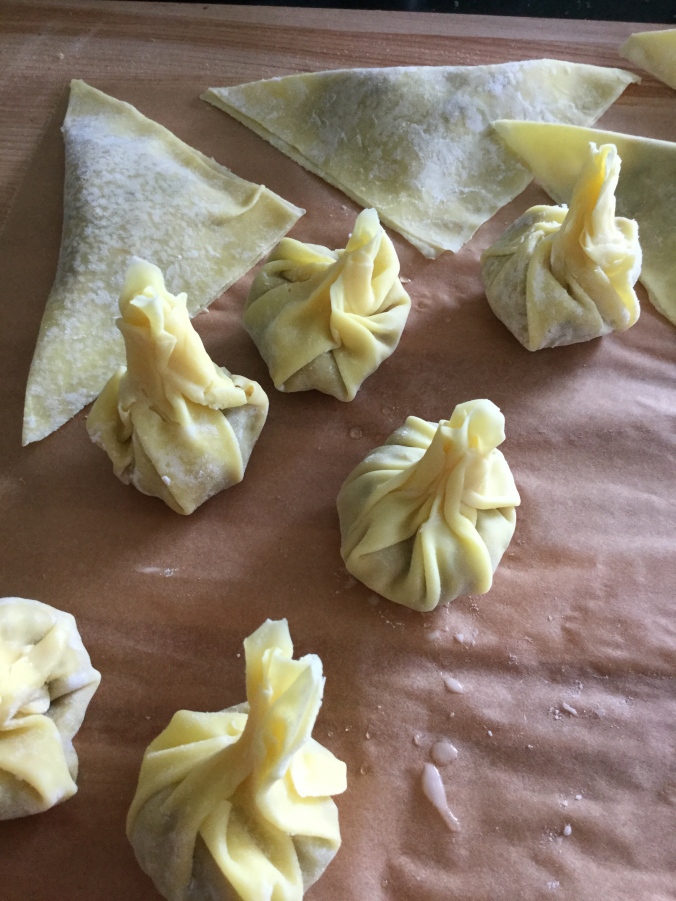
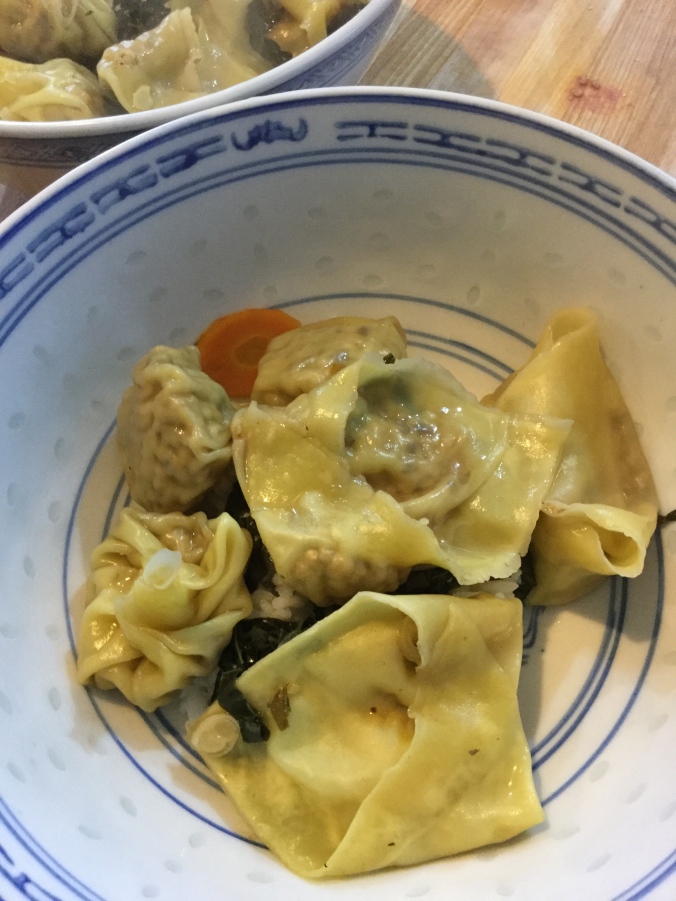
  13. You have a choice of dumpling shapes: if you have square wrappers, you can make flat triangles (just fold them over once and seal), “nurses caps” (pull the two tips of the triangle on the folded edge together and seal, or “purses” (dampen all four sides, bring them together and twist to seal). If you have round wrappers and you are a showoff, you can make pleated dumplings. I didn’t have round wrappers, so I couldn’t make those. Which shape you chose is just a matter of personal preference. Simon and I were divided. He preferred the purses. I thought the bunchy part was a bit too stodgy. I preferred the nurses caps. The flat triangles turned out to be a bit tricky to eat.IMG_0379

Now, put it all together!

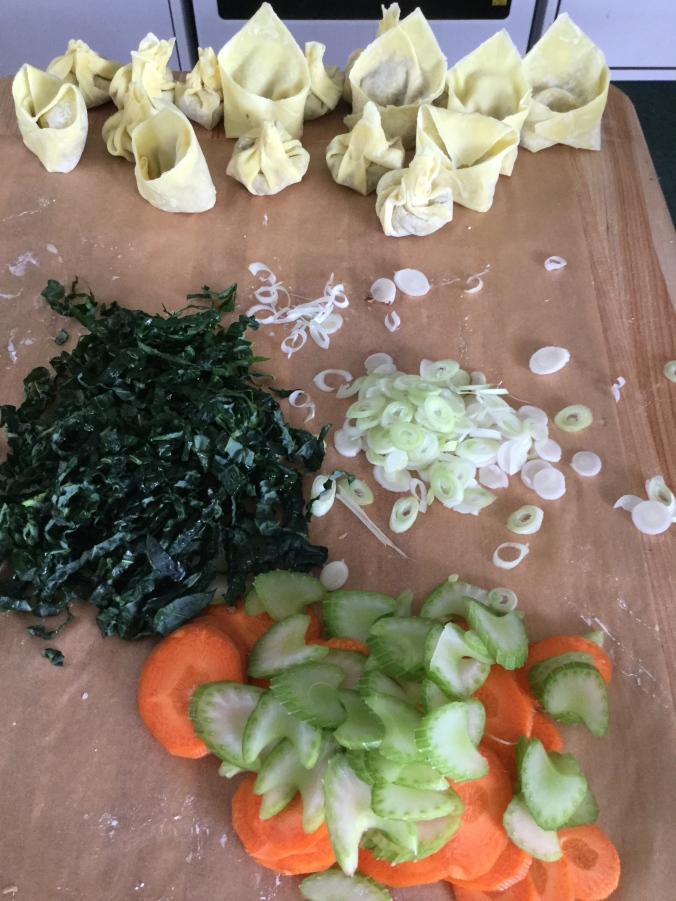
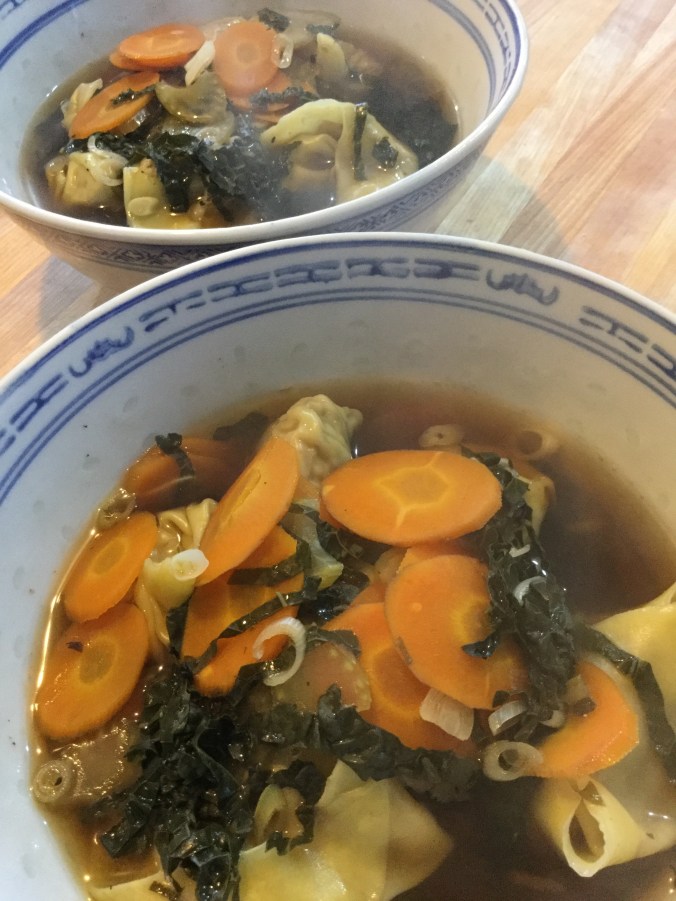
  1. Bring your yummy broth to a simmer and add the sliced carrots, celery, greens. Let them simmer for a couple of minutes, add the soy sauce and sesame oil, then
  2. Add your won tons — yes, you are going to cook them right in the broth. Let them simmer for 2-3 minutes.IMG_0381
  3. If this is dinner, you can bulk things up a bit by putting a scoop of jasmine rice in the bowl. This also adds a little textural interest. IMG_0382
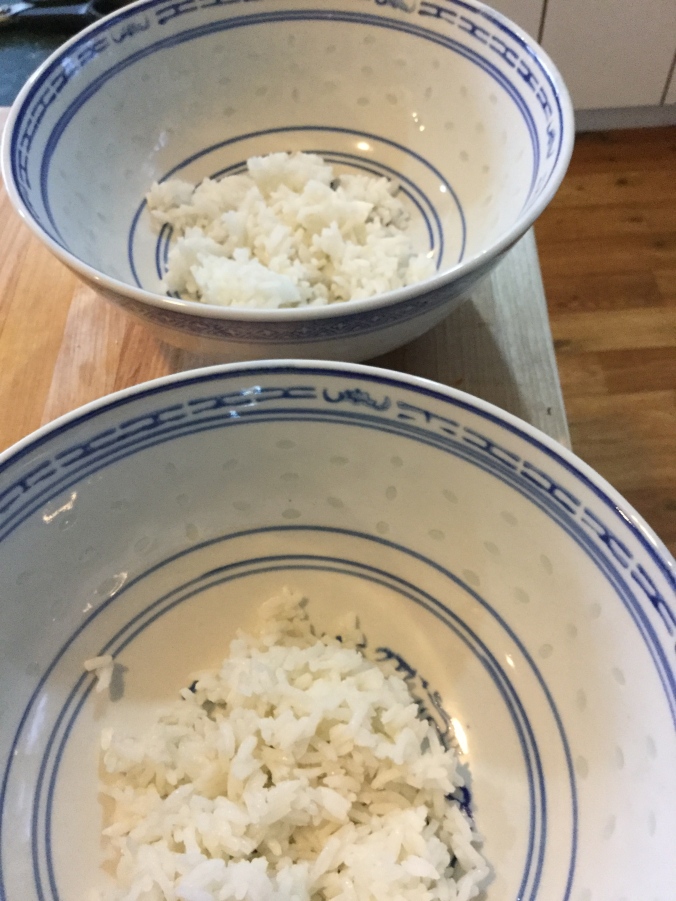
  4. Lay the cooked wontons on the rice, then ladle over the broth and vegetables.IMG_0383
  5. You can garnish the whole thing with some thinly-sliced scallions and/or bean sprouts.IMG_0384


Smoked Tomato Bisque with Roasted Corn and Zucchini: A Forty Day Invention Test, Episode One

I love smoke. I’m not advocating smoking. Don’t do it.Cigarette smoke is nasty. But, I have to confess an appreciation for the fragrance of good pipe tobacco or a fine cigar. My Uncle Chuck, though, smoked tobacco that smelled wonderful. A whiff of lovely pipe tobacco still makes my heart squeeze and I think of him. And miss him. The smell of a wood fire always smells like winter, and home. Here in New Zealand, lots of households still supplement their heating systems and hot water with wood-burning fireplaces. At the first cold snap, the air smells like hardwood smoke.

741173_10151779784298410_712962016_o-2

A mini Kale Whisperer with Uncle Chuck and his sweet-smelling pipe, circa 1958

I had a wood-burning fireplace in the basement of my house on Mt. Airey lane, but the chimney was three stories high (it was a row house) and didn’t pull very well. Every time I lit a fire, the house filled up with smoke, setting off all the smoke alarms, even the one the top floor — turns out the interior of the house pulled better than the chimney! I also discovered that wood smoke in large amounts gives me migraines. So the WBFP was replaced with a less evocative, but healthier gas fireplace.

Not only do I love the smell of smoke, I love the flavour of smoke. Smoked salmon, smoked cheese . . . smoked anything, really. Smoke is a boon to vegetarians. It is one of the ways to impart a rich, umami flavour to vegetables. I use smoke often in my cooking. I have a Camerons stovetop smoker that my Auntie Janice gave me for Christmas years ago.    If you don’t have an outdoor smoker or a stovetop smoker, though, there are lots of videos on You Tube that show you how to improvise one.


Whichever method you use, it is well worth adding smoking to your vegetarian cooking repertoire. In my first invention test, smoke lifted tomato soup to a new level.

Smoked Tomato Bisque with Roasted Corn and Zucchini

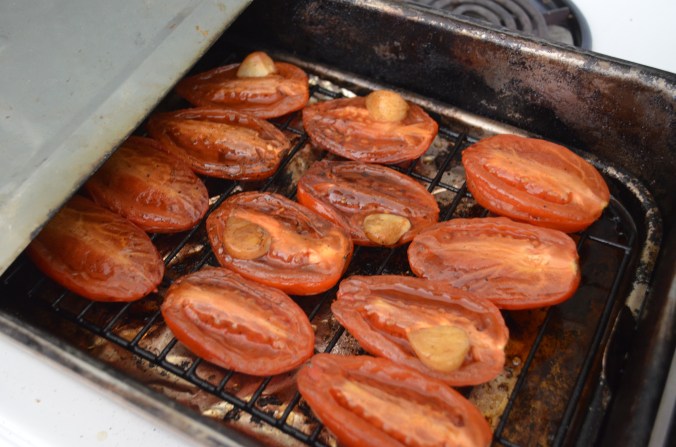
I started out with a kilo or so of tomatoes, half Roma sauce tomatoes (which they call “low acid” tomatoes here in New Zealand) and half regular old slicing tomatoes. The first step was to smoke the Romas. I smoke the Romas because they are meatier and seem to soak up the smoke better. I just sliced them in half, lengthwise, put them in the smoker, drizzled them with a little olive oil and tucked five cloves of garlic in amongst the tomatoes. The garlic smokes nicely and comes out sweet, not at all “garlicky”. These smoked over applewood chips for about half and hour and came out looking like this:
DSC_0763

In the interest of not overpowering all the other flavours with smoke, I roasted the slicing tomatoes, along with the kernels from two large ears of sweetcorn.

If you don’t have a stovetop smoker and can’t be bothered to improvise one, you can approximate the deliciousness by adding a teaspoon or so of liquid smoke. Then, you will roast all the tomatoes with the garlic.

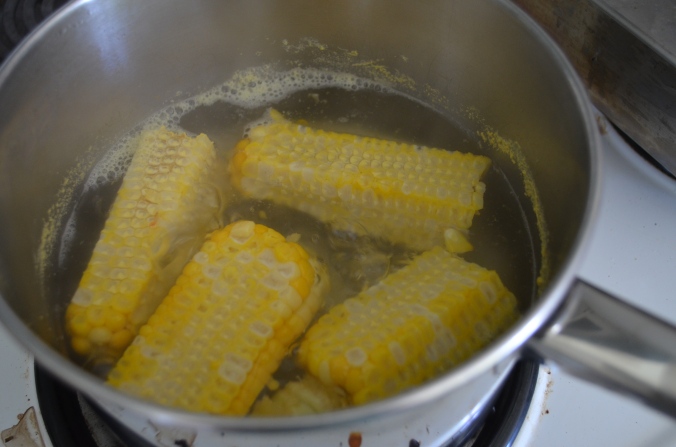
Cut the raw kernels off the sweet corn. Don’t worry about getting every last little bit, because you are going to make a broth with the corn cobs. Just break the cobs in half and plunk them into a saucepan, add a little salt and sugar (which enhances the corniness of the corn, but is optional if you are really concerned about added sugar), cover with water and boil those puppies for twenty minutes or so. You can give the cooked cobs to your chickens. We have learned the hard way, however, NOT to give them to your dogs, no matter how much they promise not to yack them all up on your carpet!

DSC_0765

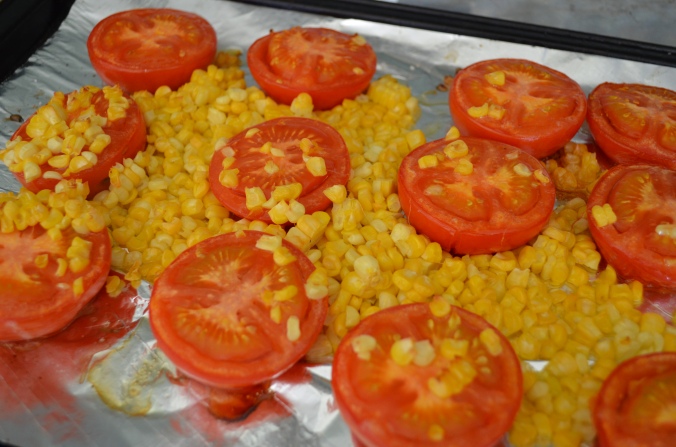
Line the baking sheet with foil so you can catch all the sweet roasting juices. Drizzle the tomatoes and corn with some olive oil and smoosh everything around to coat the veggies, sprinkle with a little salt and pepper, and roast in a 425F (220C) oven for 15 minutes, stir things around a bit and roast for 10-15 minutes more till it looks like this:

DSC_0766

The smoked and roasted tomatoes will slip right out of their skin. If you are sensitive to tomato seeds, you can also deglop them. I don’t mind the seeds, but I do like to remove the woody bit of the core that is right next to the stem. It’s not very nice. Put the tomato innards into a medium soup pot in which you have sweated two large chopped shallots or a small chopped onion with a Tablespoon of olive oil, along with the smoked garlic, a few kernels of the roasted corn, and the corn cob broth and simmer over low heat for a while. I like to keep it long and low, say 45 minutes, to really let the flavours combine.

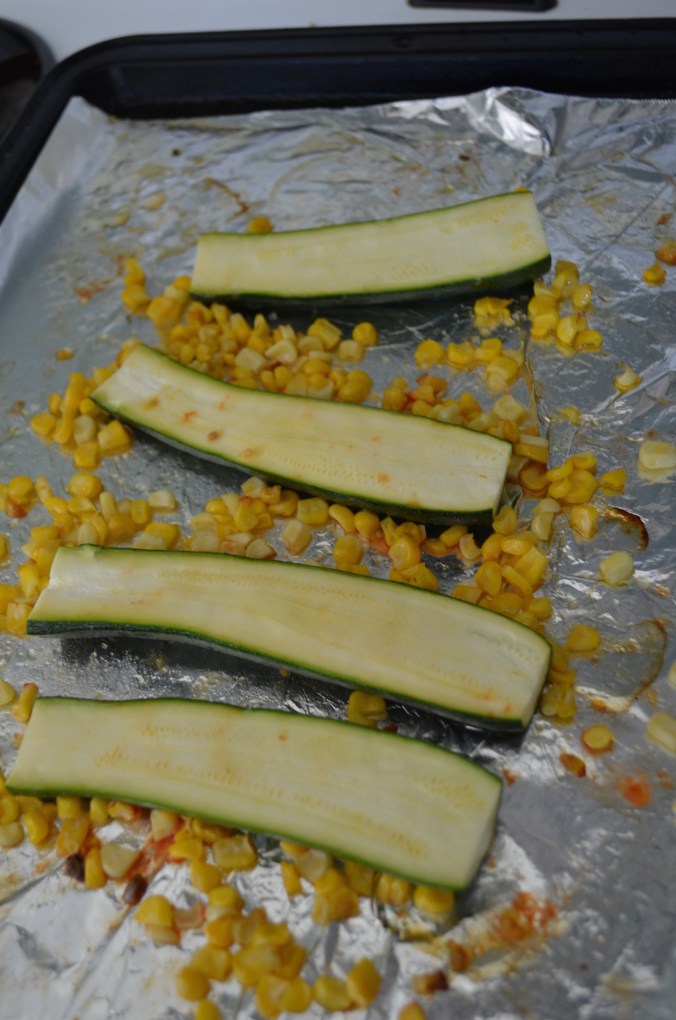
While the tomatoes and broth are simmering, clean a couple of medium zucchini and halve them lengthwise. Remove about 2/3 of the roasted corn from the baking sheet. Smoosh the zucchini halves around in the oil and baking juices, put them cut side down on the sheet along with the rest of the corn kernels. Roast them in the same 425/220 oven for about 10 minutes, flip the zucchini over and roast for another 10-15 minutes, until the zucchini has started to brown. The corn kernels should be brown and crunchy. Cut the zucchini into chunks and set aside with the roasted (but not the crunchy) corn.

DSC_0768

Let the tomatoes cool a bit, add a handful of chopped herbs (basil, parsley, tarragon, mint, or dill — whatever you like) then puree everything in a blender, or in the pot with an immersion blender. If you want a creamier soup, you can add 1/4 cup or so of half-and-half or milk. To make a vegan soup, just throw a handful of the roasted corn in when you blend the soup to thicken it a bit.

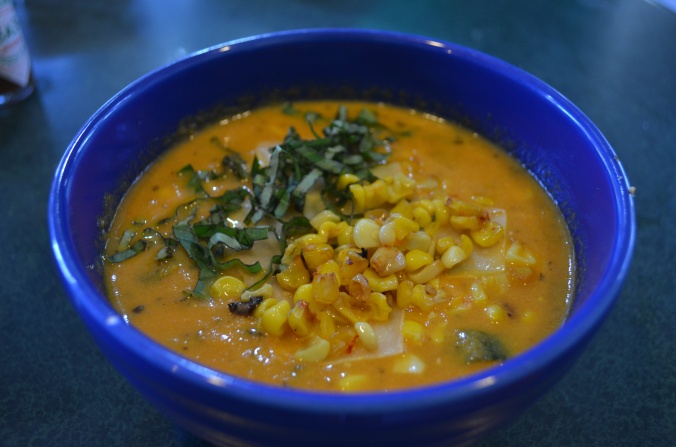
Now, add the zucchini and the rest of the roasted corn and reheat everything gently (especially if you have added dairy). Stir in a Tablespoon or so of lemon or lime juice or white wine vinegar and garnish each bowl with some of the crispy roasted corn and some more fresh herbs — I used basil.


This is not your mother’s Campbells tomato soup, but it is just as yummy with a grilled cheese sandwich.

Ingredients:

This makes four main course servings, unless you’ve invited Simon over for dinner. Then it makes three. If you want more soup, just start with more tomatoes, zucchini, and corn.

1 1/2 kilos (or a little over 2 pounds) of ripe tomatoes, a mix of Romas and slicing tomatoes is nice

2 large shallots or 1 smallish onion

4 cloves of garlic, peeled but not chopped

2 large ears of sweet corn

2 medium zucchini

2 limes, 1 lemon, or white wine vinegar

Extra virgin olive oil

Fresh herbs of your choice (basil, tarragon, mint, dill, parsley)

kosher or sea salt and black pepper to taste

Liquid Smoke (optional)

DSC_0769


Snow Soup for You!

I hate snow. I hate shovelling snow. I hate it when I have to get up at 0-dark-thirty to shovel out a spot of grass so the dogs can answer the call of nature. I hate scraping ice off my car. And I really hate it when the snow on the roof turns into ice dams and water leaks into the rafters to come out. . . oh, anywhere. 009When the hundred-year blizzard hit DC in 1996, I was attending a conference at Wilton Park in the UK. I came home to find all my upstairs window wells an inch deep in water. I hated that. I hate that people put salt on the sidewalk that irritates my dogs’ feet so I have to wash their paws whenever we come in from a walk. I hate people who think that just because there is snow on the ground, they don’t have to pick up after their dogs, as though the poop will disappear with the spring thaw. I hate leaky snow boots. Snow ice cream? Yuck. Snowmen? Depressing when they melt. And they always melt. I, ladies and gentlemen, am a snow Scrooge.

So why, whenever there is a big snowstorm on the east coast of the United States like the one this past weekend, do I get homesick? After all, one of the things I like best about living in Wellington, New Zealand, is that it never snows. So why, when CNN started warning, mid-last week, that a huge, hundred-year blizzard was headed toward Washington, DC, did I feel the urge to run to Countdown and stock up on toilet paper, white bread, and milk?

Why do I feel this longing to get my hands on a snow shovel? Why do I keep checking on washingtonpost.com to see if the Federal Government is closed? Why do I want to Scotty to beam me back to DC?

The truth is, while I hate the snow, I love the magic of a snowstorm. It isn’t just the old cliche of waking up to a wonderland dusted with icing sugar. It isn’t just that the sky is never bluer than on the morning after a massive snow dump. 008I love what a snowstorm brings out in people. Some of my best memories of my old neighbourhood in Annandale, Virginia, involved snowstorms, when everyone came together to dig out the parking lot and make sure our neighbours who were unable to shovel themselves would have clean and safe stoops and sidewalks. We built an iceberg in the cul-de-sac from the snow we cleared from our parking spots. It was a kid magnet. We were all in the same boat, and it was, for the time being, a boat that wasn’t going anywhere. You might just as well sit back and enjoy the ride. So we went to each others’ houses for supper; we shared snow shovels; we traded videos. We were neighbours, at least for a few days.

And the dogs. Every dog I’ve ever lived with got in touch with their inner wolf when it snowed. This wasn’t a surprise in the case of our two Samoyeds — Nikita and Piroshki. They were never far from their inner wolf. But Miss Peanut, Crackerjack, Shakespeare, and Cully all got a far away look in their eyes when it snowed, as if they were ready to hitch up  the sled and go mushing.

Even crabby old Cindy Dog got her inner puppy on when it snowed. Granted, in his last couple of winters, Crackerjack, at 16, had decided that he was over snow. But, for the most part, my canine family always went just the teensiest bit feral when the snow began to fly.

I was born in a mini ice-age, between two historic nor’easters that hit the DC area in February and March 1958. I remember there being one or two big dumps of snow each winter in the 1960s. The biggest was in January 1966. CCI26012016_3I got a sled for Christmas the year before — a blue plastic toboggan that looked like a space ship. It was one of those Christmases — much like Christmas of 2015 — when the temperature hit 70F on Christmas Day. My ever amazing Dad pulled me around the yard on the toboggan, on the grass. So, when the snow hit, the sled had grass stains. Jeannie et. al.2Our house was on a steep hill — excellent for sledding and snow fort building. Not so excellent for shovelling out the driveway. And since we lived on a dead end street with only three houses, Dad had to shovel all the way up to Sharon Chapel Road. Dad — a son of Milwaukee and lake effect snow — didn’t love snow.
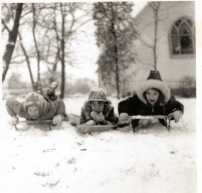
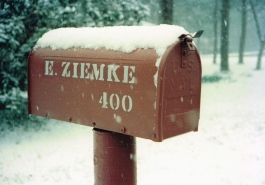
Perhaps that’s why he decided, a year later, to move us to Georgia, where he could be assured that there would be no blizzards. Now, it’s true there aren’t blizzards in Georgia, but there are ice-storms, which can be much worse, really. All the the cold and wet without the fun and, often, without electricity and cable. Once in a blue moon it would “snow” — which wasn’t really snow but accumulated sleet. And we did have snow days. My freshman year in High School we got an extra week of Christmas vacation because it “snowed.” CCI26012016_2My friend Andrea broke her leg sledding and spent the next several months in a full-leg cast. Usually, though, snow in Georgia meant some version of ice. Any Yankees who are tempted to make fun of how we Southerners panic at the first sight of snow, I defy you, or anyone, to drive on the sheets of ice that form on untreated roads in a Georgia ice storm. One year, during a particularly bad ice storm, one of the pine trees in our yard came down under the weight and took down our electrical lines. It was so cold in the house that our budgerigar and my Siamese fighting fish died. Dad, not one to take chances, and in revenge for the lost, cut down all the rest of the trees in the yard. Overkill? Maybe.

When the first wave of Snowmageddon hit DC in January 2010, I was in the UK, at a conference at Wilton Park. Sound familiar? Spooky, huh? Anyway, I managed to get on the first flight back from London — when we landed at Dulles, we sat on the plane for about an hour because no one who knew how to drive the gate had managed to get to work. Then we waited for another hour in customs. None of the baggage handlers had made it to work, either. That was nothing compared to Simon’s ordeal. My adorable new husband, bless his cotton socks, made what had to be a harrowing drive to the airport to meet me, and we slipped, spun, and slid home in his trusty RAV4. The experience was so shattering, Simon was never able to drive on the Beltway again.

As a newcomer to DC, Simon wasn’t up on the culture of panic  pre-snow shopping, so for the next week or so, while the Federal Government — and hence my place of employment — remained stubbornly closed and our neighbourhood roads remained stubbornly unplowed, I became a pantry cook.

I always keep a sizeable stash of dried beans, flour, and canned things, so there was plenty to work with. I channelled my homesteading ancestors. OK, I didn’t have any homesteading ancestors, but my grandparents lives in Eagle River, Wisconsin during the Great Depression were challenging enough. I baked bread. I made long, slow cooking soups. I baked dog cookies. We shovelled snow. We watched a lot of videos because the snow had blocked the satellite dish — leading Simon to insist we get cable. They were golden days.

One of my blizzard rituals is to make a big pot of stock. This goes back to my carnivorous past, when chicken stock was a pantry staple. The store bought stuff is never as good as homemade, but making large amounts of stock presents a challenge when it comes time to cool it. It isn’t really safe to leave a pot of meat stock at room temperature for the hours it would take to cool down. But put in in your fridge and you run the risk of warming up the cold food faster than you cool down the hot stock. During a blizzard, you can bury your hot stock in a snow bank. It’s the next best thing to a blast chiller.

I don’t make chicken stock anymore, but snow — even snow ten thousand miles away — still triggers in me the urge to get out the stock pot. Instead of chicken bits, I gather up excess veggie bits — the tops of the enormous leeks, green onions and celery I buy at the market, onions, slightly dry mushrooms, carrots, a couple of waxy potatoes, the odd apple or pear, a parsnip, maybe a bulb or two of fennel, and garlic, always lots and lots of garlic. If I’m feeling industrious, I chop everything. If not, I just leave it in chunks. Add enough water to cover the lot, throw in a couple of bay leaves, a few black peppercorns, a handful of whatever herbs you have around, and some kosher or sea salt and bring it all to a simmer. If you want a dark stock that looks and tastes more like beef stock, you can caramelise some of the vegetables (carrots, onions, celery, potatoes) in a very hot oven until they are good and brown. Don’t let them burn, though. Brown is good, but burnt just tastes like burnt.

Caught in a blizzard without a fridge full of vegetable bits? Peel a couple of heads of garlic (yes, the whole thing), add a bay leaf, a spring of fresh thyme (or a teaspoon or so of dried), some black peppercorns, a bay leaf, a teaspoon of salt, a glug of olive oil, and two quarts of water. Simmer that. It smells heavenly and tastes just like chicken stock. I kid you not.

So, next time it snows, forget the white bread and Doritos. Gather up your veggies, add water, and just let the whole delicious mess simmer, and simmer, and simmer. Long and slow. Go outside and shovel snow. Build a snowman. Make a snow angel. Come inside. There’s soup for you!

The Sixth Cookbook of Christmas: Twelve Months of Monastery Soups

monastery soups

I am a spiritual seeker. My mother always called me her “otherworldly child.” My favourite movie, for a while, was “The Song of Bernadette.” I read St. Augustine’s Confessions and Thomas Merton’s The Seven Story Mountain as a teenager. The interfaith nature of Merton’s spirituality has shaped my own spiritual journey to this day.  In the spring of 1977, Dr. John Granrose took our Honors Ethics class on a field trip to visit the Monastery of the Holy Spirit, a Trappist monastery near Conyers, Georgia. That day has stayed with me all these years. Ever since, I’ve felt drawn to a quiet life of contemplation. That appeal of that lifestyle was, I remember, exemplified in the meal the brothers served us at their guest house — vegetable potage, monastery cheese, and rustic bread. While my faith in organised religion has evaporated over the decades, my yearning for the quiet contemplative life has not. Many years later, now that I’ve stepped away from the noise of my career as a defense analyst, I am beginning to live a quiet life of contemplation. Thinking and writing about food is bringing me the peace and happiness that organised religion or proximity to power never did.

monastery

The Monastery of the Holy Spirit, Conyers, Georgia

In cooking, as in life, sometimes the greatest beauty is found in simplicity. For me, the simple meal of soup, cheese, and bread is restorative in a way that no other meal can be. When loved ones are sick, or sad, we make them soup. When I’m sick and sad, I want someone to make me soup. Before she died, my mother was sick and sad — for too long — and our friends Kline and Carolyn brought her matzo ball soup. I will never forget that soup. It might not have cured all that ailed Mom, but it restored me and my Dad and was, quite simply, my most unforgettable soup. It tasted like love. Thank you, Kline and Carolyn.

CCI17122015

Alex and her fairy godmother making matzo balls

A few years later my Goddaughter Alex borrowed a book from the library called How Many Matzos Make a Soup?  She loved it. I haven’t been able to track it down, but I remember the punch line was that what makes a good soup isn’t the number or size of the matzos, but the love that goes into making them. Inspired by the story, and my duties as fairy godmother, Alex and I made our own matzo soup. It was delicious.

As a child, I loved Marcia Brown’s classic children’s book Stone Soup. I was captivated by the notion that with an onion here, a carrot there, it was possible to create food for a village. It’s not that different from my frequent Saturday morning ritual combining trimmings from this week’s purchases (leek and green inion tops, celery leaves, a carrot or two) with the things that didn’t make into last week’s dinners (slightly past their prime mushrooms, the other halves of onions, pea pods, a lonely potato) in the stock pot to simmer away.  In its way, soup is the secular equivalent to the feeding of the five thousand. With a handful of beans, a potato, and onion, a carrot, and some garlic, I can make a warm, tasty, satisfying meal.  IMG_0249

As I’ve traveled over the years, my most memorable meals have involved simple soups: Portugal’s Caldo Verde (just potatoes, kale, and linguica), Thailand’s gorgeous Tom Yom soups, Pho from Vietnam, miso soup  from Japan, and the hearty bean and vegetable soups of Italy. Singapore’s Night Market offers too many options to name, as do the Bistros of Paris and the Pubs of England. I’ve loved nettle soup in Scotland and seafood chowder on Stewart Island. I can’t say I loved the goat neck soup in Ghana, but I certainly loved the generous spirit in which it was offered. And the simple bean and vegetable soups prepared by out Masai cook at Freeman’s Safaris in Kenya were the perfect end to hard day on the Mara.

The Kale Whisperer’s Sixth Cookbook of Christmas, Brother Victor-Antoine d’Avila-Latourette’s Twelve Months of Monastery Soups (Triumph Books, 1996), encompasses both my fascination with the contemplative life and my love for soup in a unique and tasty way. This is not strictly vegetarian, there are a few recipes that include a bit of meat or seafood, but most of those can be easily adapted to vegetarian versions. Obviously, you probably won’t want to make the Shrimp Soup de Luxe without shrimp. On the other hand, one of my favourite recipes here is the French Cream of Lentil Soup, calls for two strips of bacon, but it is just as delicious without the pig. I’ve cooked it both ways, I can personally vouch for that. The book is peppered with notes and quotes about soup, things that go into soup, people who make soup, and people who eat soup. If you aren’t Catholic, you will still love this book. If you aren’t Christian, you’ll love this book. If you love soup, you’ll love this book. This is another cookbook you’ll want to read, cover to cover.

Monastery Soups consists of twelve chapters: one for each month of the year. If you live in the northern hemisphere, you could probably cook right through the book chronologically. Down here in the antipodes, you’ll have to work inside out. Brother Antoine took care to match ingredients to availability. And as the gardener at Our Lady of the Resurrection Monastery in upstate New York, he understands locavore cooking. Ever wondered what you could do with those gorgeous greens attached to your bright red radishes you couldn’t resist at the market? Brother Antoine has a soup for that: Soupe Pelou. It’s delicious. Is your garden overrun by sorrel? He has five soups for that. The recipes are simple and come from all around the world. Adapted from the monastery kitchen, they don’t require fancy equipment or exotic ingredients. These are weekday soups, not simmer on the back of the stove all day soups. Some vegetables, some herbs, broth, wine, garlic and a pinch of salt. And love; lots of love.

Some of my earliest childhood memories involve soup: chicken noodle with oyster crackers, cream of tomato with cheese toast, potato soup with lots of celery from the German restaurant I only remember as “the potato soup place.” I’m sure the very last meals I’ll enjoy will also be soups. And so many soups — humble and glorious — along the way. To paraphrase T.S. Elliot, I will measure out my life in soup spoons.

stone soup