I am a simple soul. I wear jeans and t-shirts. I prefer Chucks to heels. I don’t wear make-up. And my favourite ice cream flavour is vanilla. Less is more. When watching Masterchef, I am frustrated when the judges and contestants yammer on about “technique” and “plating.” And what is the point of foam? My cooking mantra is “Let the food be the food.”  My favourite foods are simple: mashed potatoes with butter, salt, and pepper; tomato sandwiches with tarragon mayonnaise; pasta with sautéed vegetables and a little parmesan; pizza margarita with sweet tomatoes, basil from the garden, and milky, fresh mozzarella cheese. I am also a great believer in cooking what’s in season. There is nothing more delicious than a perfectly sun-ripened tomato; and there are few things less appealing than a pale, flavourless winter hot-house tomato — no amount of technique will make it taste good. I defy anyone to come up with anything more exquisite than an ear of sweet corn straight off the stalk with a bit of butter, salt, and pepper.
I prefer food that is only one degree of separation from the soil. I’ve dined at three-Michelin-starred restaurants, but too often the experience left me cold.  I appreciate the art and science behind modernist cuisine, but I cannot warm to a dining experience that puts so much technology between me and the food. I’m suspicious of “fusion” cooking that confuses me with too many moving parts. Dining in the dark? Spare me. If a recipe has forty steps, I reckon that is about 35 steps too many. I don’t have a single squeeze bottle in my kitchen, unless you count the ones Simon’s HP Sauce comes in. As my adorable partner put it, I have no time for precious food.
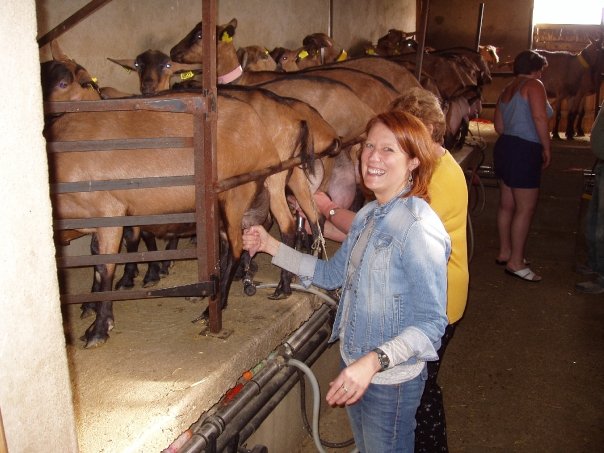
A few years ago, I spent a month in Sancerre, a picture book medieval walled city in the Loire valley.  I was immersing myself in French at the Coeur de France Ecole des Langues. Every morning, I walked into town and bought my food for the day. A croissant or petit pan au chocolate for petit dejeuner. A baguette at the boulangerie, a handful of haricot verts and champignons at the greengrocer, a wedge of cheese here, a bottle of wine there. We went on a field trip to a chèvre farm where I milked my first goat.
 Most days, I lunched at the Cafe des artes, where the friendly staff would patiently suffer my feeble French (I’m sure I saw their ears bleed). Once, I had a long and spirited argument with the veg vender from the market about George W. Bush. He loved him. I didn’t.
 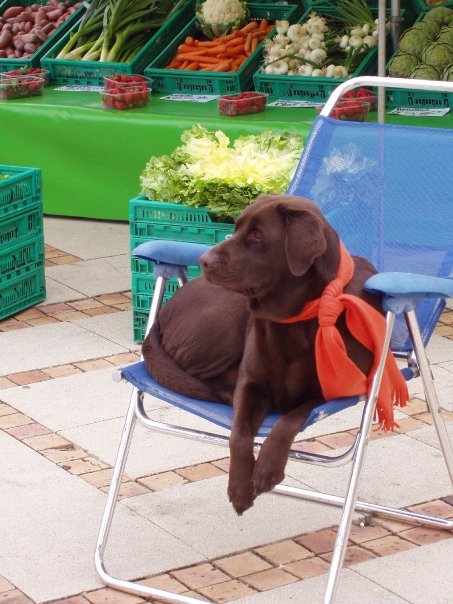 I rarely ate dinner out. My evenings were given over to homework and working on my vocabulary by watching badly dubbed episodes of NCIS and CSI. And I cooked, simply, and with whatever looked good at the market on the day. It was spring, so the market was teeming with some of my favourite things: asparagus, tiny artichokes, and haricot verts.
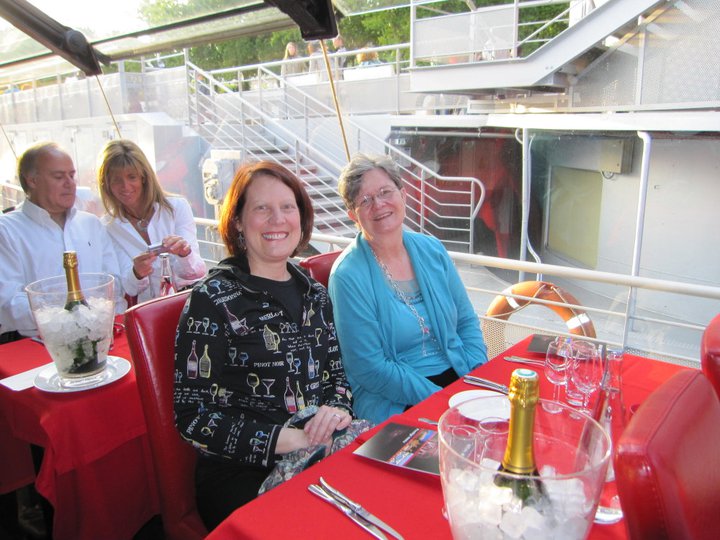
The Bubbles were pretty nice, too!
My neighbour, Anita, and I spent a long weekend in Paris in 2011. I think she would agree that one of the best meals we had there was a simple omelette, salad, and a glass of house red wine at a corner cafe near our hotel. I had a similarly memorable meal in Giverny, just outside Monet’s house. In Lisbon, sardines grill over open wood fires all over the city, and the aroma is tantalising. My favourite meal in Brussels was pommel frites with mayonnaise.
I visited Venice briefly in 2013, and spent much of my time wandering around side streets and exploring the fruit and vegetable markets. I got lost. I got hungry. I stopped for a plate of linguine con vongole and a glass of Orvieto at a cafe at the edge of the vegetable and seafood market. I walked more. I got lost again. I met a lovely man who made carnival masks. I chatted with another artist selling his watercolours outside one of Venice’s ancient churches. I bought two. I walked more.


Got lost more. Ate lemon gelato. Finally, having managed to find my way back to the train station, hot, footsore, and happy, I drank the best mug of beer I’ve ever had. The most expensive, too, but that didn’t matter. It was a golden day.
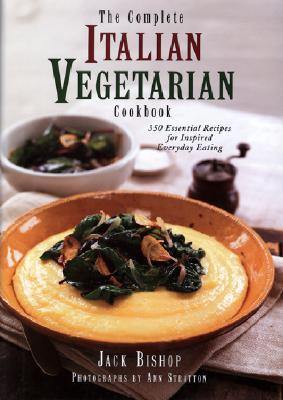
The Kale Whisperer’s Eleventh Cookbook of Christmas, Jack Bishop’s The Complete Italian Vegetarian Cookbook, honours the beauty of simple food. This book is full of the kind of simple, fresh food that I love: polenta, pasta, and rice with seasonable vegetables; frittatas, tortas, and pizza; salads and bruschetta. Bishop is an editor at America’s Test Kitchen, and he provides plenty of good, practical advice. His step-by-step instructions mean the recipes here are manageable by even a beginner. I particularly appreciate the serving suggestions that follow each recipe. None of these recipes require any special equipment. Not a foam canister in sight.
I probably cook from The Complete Italian Vegetarian Cookbook more than any other single book on my cookbook shelf. I especially enjoy it in the summertime, when no one wants to eat hot, heavy food. Packing a picnic for an outdoor concert? This is your cookbook. One of my favourite picnics consists of a vegetable frittata (my favourite is the Zucchini Frittata with Parmesan and mint), the Roasted Potato Salad with Herbs and Red Wine Vinegar, and a loaf of crusty country bread. I am a huge fan of pasta e fagioli, and Bishop’s version, with lots of garlic and rosemary, is among my favourites. I also love the Chickpea Soup with Fennel and Orange Zest. I have borrowed that flavour combination — chickpea, fennel, and orange — as a pizza topping, too.
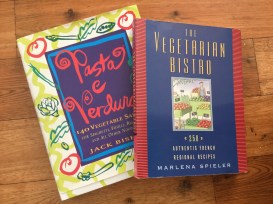
Jack Bishop wrote another excellent cookbook, Pasta e Verdure (Morrow, 1994). Sadly, it is out of print, but there are used copies for sale on Amazon. In it, Bishop presents 250 recipes for simple pasta and vegetables. The books has chapters for 27 different vegetables, so if you come him from the farmers’ market with fresh, spring favas, or all you have for dinner one winter night is some pasta and cauliflower, you can find something delicious to cook. I often use Bishop’s flavour combinations as pizza toppings. If you can put it on pasta, why not pizza? Each chapter opens with advice on how to choose, clean, and store each vegetable. Many of the combinations he presents here have become standards for me: the hot pink sauces (tomato + red pepper flakes + a little cream) is a particular favourite. My mother used to make what we called “crummy spaghetti”, which was simply spaghetti tossed with bread crumbs toasted in a little butter. Bishop has several scrummy variations on that theme: Spaghetti with Wilted Spinach and Breadcrumbs and Linguine with Asparagus, Toasted Breadcrumbs, Lemon, and Garlic. My biggest deliciousness surprise was the Fusilli with Shredded Brussels Sprouts, Orange, and Almonds. Think you hate Brussels’ Sprouts? You won’t if you try this!
Let me finish by mourning another much-loved but tragically out-of-print cookbook: Marlena Spieler’s The Vegetarian Bistro (Chronicle Books, 1997). Spieler does for simple French cooking what Bishop does for Italian Vegetarian cooking. I haven’t even bothered to flag the “to cook” recipes here, because I can literally open the book to any random page and happily cook whatever I find there, knowing it will be delicious. If you can track down a used copy (they are available on Amazon, too), buy it. Then cook the Lentilles “Dom Perignon” (Lentils cooked in Champagne — don’t worry if you don’t have left over bubbles, it works with any dry white wine). Just lentils, shallots, garlic and white wine.
Simply. Delicious. Food.


 Every night, before bed, he would pack me into my red snow snuit and we would stand out in the cold and admire the lighties. Those are some of my earliest memories.
 I stopped laying down new Christmas memories when Dad died. For me, Christmas was about family, and our little family had dwindled to one.


 Today is Monday. As my hero, Bloom County’s Bill the Cat, would put it: Blech! Ack! Thbbft! Granted, it’s the Monday before Christmas, not your usual, run-of-the-mill, shoot the alarm clock Monday. Still, Monday is Monday. Before I had a nervous breakdown and opted out of the rat race, I’d start dreading Monday about 5 pm on Saturday. The biggest advantage of Monday holidays was that I could enjoy spending half of Sunday with a pot of coffee and the Sunday New York Times without a pit in my stomach. I was a Monday hater of the first order. So much so that I started hating Sunday because all I had to look forward to on Sunday was Monday. I hated Monday even when I was enjoying my job.

 with both. I can resolve my misgivings about battery chickens and my suspicion that in New Zealand, as in the US, the “free-range” designation on eggs is dubious by keeping my own chooks. But it is highly unlikely that we will adopt our own cow. And recent exposés concerning cruelty in the New Zealand dairy industry make it increasingly difficult to look the other way.
  So, I try to cook vegan often and am constantly on the lookout for amazing vegan recipes so that, if and when we make the leap, I will have a solid cooking foundation. Most of the time, I am disappointed. Thug Kitchen, and the website from which it is compiled,
 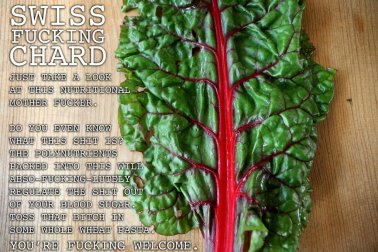 The Thugs really are speaking to an audience of people who probably never cooked and quite possibly never ate food that didn’t come from a drive-in, a box or a can. The thug life is about overcoming struggles, disadvantages, and bad influences to succeed and thrive despite any obstacles. The Thug Kitchen is “a fucking wake-up call. This for that section of the grocery store that you avoid. This is for the drive-thru lines so long that they block traffic. This is for ketchup and pizza qualifying as fucking vegetables. This is for everyone who wants to do better but gets lost in the bullshit.” The Thugs understand what Jamie Oliver doesn’t: Have a f-ing sense of humour!
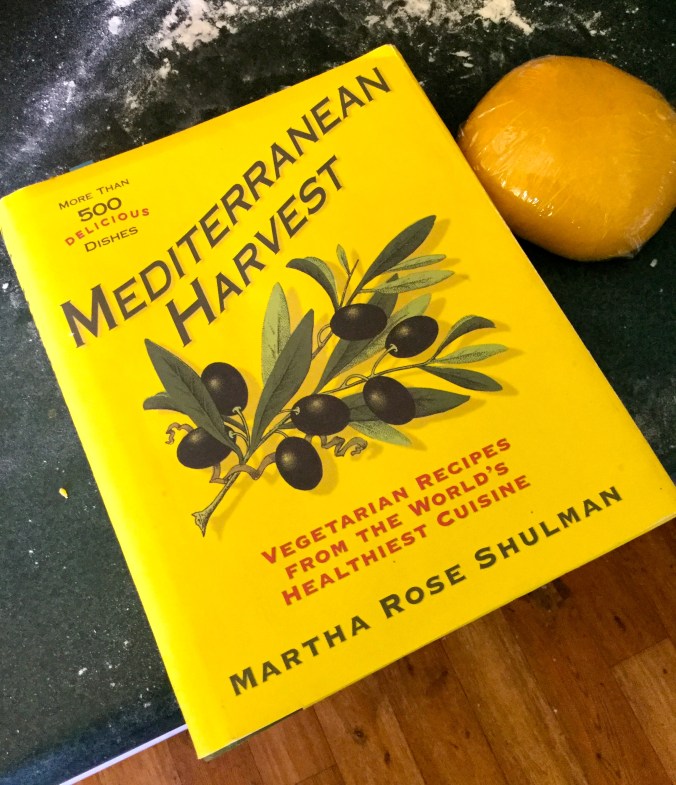
 The Thugs are absolutely spot on when they warn that the Chickpeas and Dumplings could cause a “f-ing food coma.” It really is that good. So is the Wedding Soup with White Bean Balls and Kale, a more than plausible veg version of traditional Italian Wedding Soup — especially if you make it with the Garlic Broth from the Kale Whisperer’s Fourth Cookbook of Christmas, Mediterranean Harvest, which you will have bought by now.




 It would not be an exaggeration to say that in the high season, the leeks here approach the size of a baseball bat (but not a cricket bat). When I come across a recipe that calls for “4 leeks, white and light green parts only,” that could easily amount to about a ton of chopped leeks. Okay, maybe not a ton, but a lot more than you’d get from your standard, American, grocery store leek. What We Mean helpfully tells you that 1 medium leek = 3/4 cup chopped or 3 ounces (85 grams).
 Here’s your answer: 1 medium zucchini weighs 10 oz (285 grams). The most useful thing I’ve learned from What We Mean: a medium bunch of spinach leaves, 10 ounces (285 grams) of fresh spinach by weight will turn into 1 cup (236 ml) of cooked, squeezed dry spinach. There are also weight equivalents of various cheeses and nuts by volume and a handy customary / metric conversion chart.




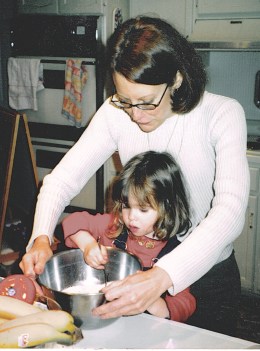


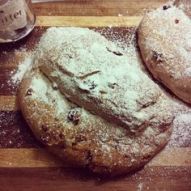 It tastes like my childhood and makes me happy, a little bit sad, and very grateful. And when it is a little stale, its makes the best toast ever.



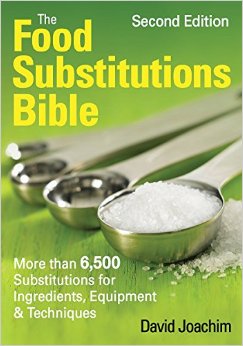
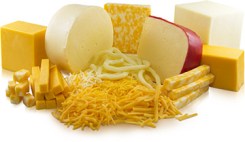 And what if you are making a potato and tomato gratin, and your recipe calls for a topping made with 1 cup (4 oz; 120g) of grated Gruyere cheese, but you don’t want to lay out the cash for an expensive chunk of Gruyere for a weeknight dinner? Look up Gruyere, and you’ll find that you can substitute Comte, Beaufort, or Emmental. OK, still pricey. But you know that Emmental is a Swiss-type cheese, so turn there and you find that, yes, indeed, you can substitute Jarlsburg (usually cheaper than Emmental) or Swiss cheese. I find the cheese substitutions particularly useful here in New Zealand. It can be difficult, and expensive, to buy the more obscure regional cheeses. And even if you can find Riccotta Salata, you might not want to shell out for it for an everyday meal.

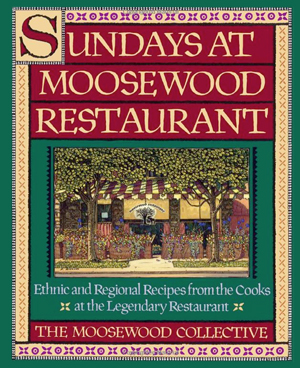
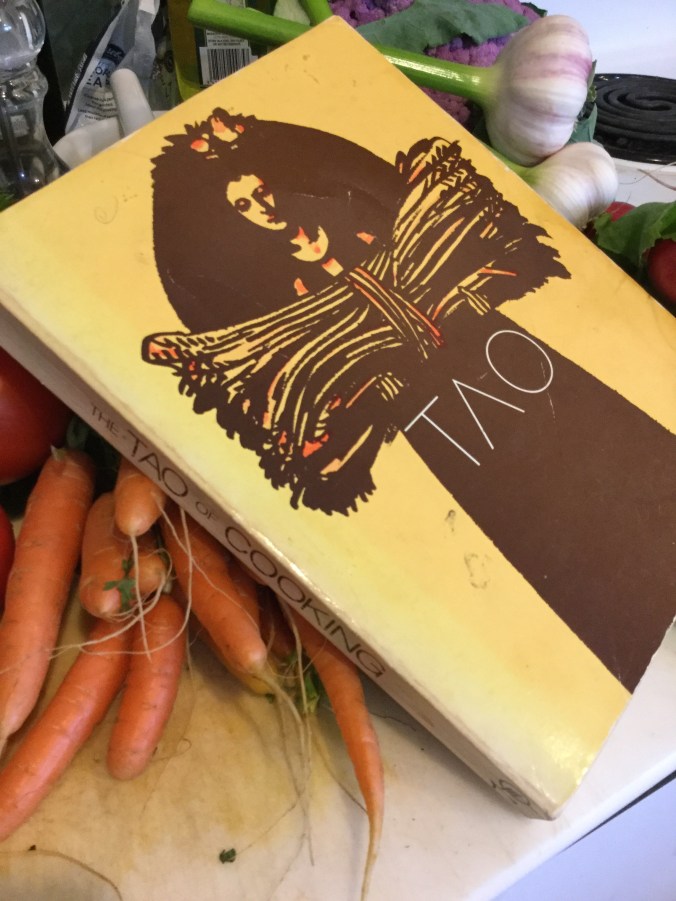 In August 1981, my then soon-to-be first husband and I loaded up a U-Haul trailer and moved from Athens, Georgia to Bloomington, Indiana. Our first apartment was a grim little efficiency all done up in 1970’s olive green and gold. The galley kitchen was in the living room, which had a giant grease stain in the middle of the carpet. It had only two positives: it was a short walk to the Indiana University campus, where I was working on a Master’s Degree in History, and it was just a couple of blocks away from the Tao Restaurant and Rudi’s Bakery.
 It is splattered, dog-eared, and its spine is shot — as a well-loved cookbook should be. It was my first vegetarian cookbook and it is still on the top shelf of my cookbookcase. When I need a quick vegetable side, or a snappy salad, here’s where I go.


 The Kale Whisperer