

At the end of my Christmas cookbook-reviewing marathon, I’m going to cheat a little. I have changed my mind several times concerning which of Molly Katzen’s cookbooks most deserved to sit at the top of my Twelve Cookbooks of Christmas. I have some good reasons to recommend The Enchanted Broccoli Forest, which I’ll get into momentarily. But I’m really recommending Katzen’s complete oeuvre. She has written several cookbooks, including three wonderful cookbooks for kids — Pretend Soup (1994), Honest Pretzels (1999), and Salad People (2005) –and there isn’t a clunker in the bunch, although I use some more than others. With the exception of her most recent, Vegetables at the Heart of the Plate, all her cookbooks are brightened up by her own whimsical illustrations. I particularly love the first two, The Moosewood Cookbook and Broccoli Forest, which are hand-lettered, too. It’s like cooking from a recipe copied out by a friend or handed down your Mom or Grandma.

Along with The Tao of Cooking (See the Second Cookbook of Christmas), Moosewood and Broccoli Forest are my oldest cookbook friends. I’d like to say I learned to bake bread from my Mom, or from Bernard Clayton (who did teach classes in Bloomington, India when I lived there), but the truth is, Molly taught me to bake bread. Her illustrated tutorial on bread making is magnificent. It is important to note that her instructions are for making bread by hand, which you really should do at least once. But the recipes are easily enough adjusted to make the dough in a standing mixer or, if you must, a food processor. Because most of her breads are partially or completely whole grain and many include heavy ingredients (like nuts, fruit, or vegetables, she uses the sponge method. This allows the yeast and flour to develop some gluten before all the ingredients are added. The bread chapter in Broccoli Forest alone is worth the price of admission. 
Broccoli Forest includes similarly useful tutorials for making quiche, working with filo pastry, homemade pasta, soufflés, omelettes, and knife skills for vegetables (The Various Cuts of Vegetables). Her chapter on Light Meals for Nibblers includes two of my favourite recipes of all time: Pesto Bean Dip, and Mushroom-Cheese Pate. Broccoli Forest is still, after all these years, one of my most-used cookbooks. Especially when I’m feeling nostalgic for slightly hippy-dippy fare, like Tofu Nut Balls.
When people ask me to recommend a starter vegetarian cookbook, I usually recommend Broccoli Forest and /or Moosewood. The latter is particularly notable for its soups and salads, including four variations on that Fawlty Towers classic, Waldorf Salad.
The Moosewood Cookbook, first published in 1977, has a definite hippy-dippy vibe. I have both the original (1977) edition and the 1992 revised 15th anniversary edition. The revised edition goes easier on things like cheese and eggs, but it also lost some of the sense of humour of the original. So Stuffed Eggplant Hippie-Style becomes Stuffed Eggplant 1970s Alternative Lifestyle-Style. Doesn’t have the same ring, somehow. The recipe is just as good. Sadly, my beloved won’t stay in the same room with an eggplant. So I just stand in the market and stare longingly at what has become, for me, the forbidden fruit.

Complete Beet Pizza
Molly’s The Vegetable Dishes I Can’t Live Without (2007) is a cookbook I can’t live without. She returns to the hand-illustrated, hand-lettered vibe (although I suspect the lettering in one of those fonts made to look hand written). I almost got confirmed Brussels Sprout hater, Pete, to confess that he liked the Crispy-Edged Roasted Brussels Sprouts. I put the Complete Beets on Pizza, with mozzarella and a few pine nuts. Her Best Ever Green Beans Amandine with Leek Chips are the 21st century answer to “that” green bean casserole. I’m hoping against hope that my wee spaghetti squash seedlings grow big and strong so I can try the Spaghetti Squash with Carmelized Onions and Crispy Sage Leaves.

Grow, little spaghetti squash, grow!
Our family always opened our presents on Christmas Eve. The official story was that we celebrated Christmas the German way, but I also suspect it was a step to enable the parents to sleep in on Christmas morning. When I was very little, Santa came to our house first, and put up the Christmas tree while Mom and I were at church. It was magical. One year, Santa snagged his britches on the fireplace andirons. Very Exciting. As I got older, Santa stopped coming and we put up the tree earlier. But we stuck to the Christmas Eve tradition. Mom and I went to the 5:30 family service at St. Gregory the Great Episcopal Church and watched the Christmas pageant, which for many years starred a donkey on wheels built by the loving hands of my Dad. Then we came home to a simple Christmas Eve supper before we dove into the loot. For the last few years, I did the cooking and always made the same Christmas Eve meal: Pasta alls Vodka and Sautéed Spinach with Garlic and Lemon. It is already Christmas Eve here in New Zealand, so I hope you’ll excuse me while I break out the vodka.
Merry Christmas!



 I appreciate the art and science behind modernist cuisine, but I cannot warm to a dining experience that puts so much technology between me and the food. I’m suspicious of “fusion” cooking that confuses me with too many moving parts. Dining in the dark? Spare me. If a recipe has forty steps, I reckon that is about 35 steps too many. I don’t have a single squeeze bottle in my kitchen, unless you count the ones Simon’s HP Sauce comes in. As my adorable partner put it, I have no time for precious food.
 I was immersing myself in French at the Coeur de France Ecole des Langues. Every morning, I walked into town and bought my food for the day. A croissant or petit pan au chocolate for petit dejeuner. A baguette at the boulangerie, a handful of haricot verts and champignons at the greengrocer, a wedge of cheese here, a bottle of wine there. We went on a field trip to a chèvre farm where I milked my first goat.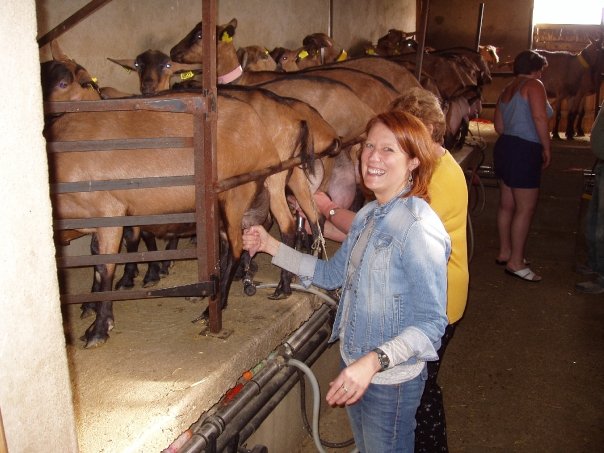





 Today is Monday. As my hero, Bloom County’s Bill the Cat, would put it: Blech! Ack! Thbbft! Granted, it’s the Monday before Christmas, not your usual, run-of-the-mill, shoot the alarm clock Monday. Still, Monday is Monday. Before I had a nervous breakdown and opted out of the rat race, I’d start dreading Monday about 5 pm on Saturday. The biggest advantage of Monday holidays was that I could enjoy spending half of Sunday with a pot of coffee and the Sunday New York Times without a pit in my stomach. I was a Monday hater of the first order. So much so that I started hating Sunday because all I had to look forward to on Sunday was Monday. I hated Monday even when I was enjoying my job.

 with both. I can resolve my misgivings about battery chickens and my suspicion that in New Zealand, as in the US, the “free-range” designation on eggs is dubious by keeping my own chooks. But it is highly unlikely that we will adopt our own cow. And recent exposés concerning cruelty in the New Zealand dairy industry make it increasingly difficult to look the other way.
  So, I try to cook vegan often and am constantly on the lookout for amazing vegan recipes so that, if and when we make the leap, I will have a solid cooking foundation. Most of the time, I am disappointed. Thug Kitchen, and the website from which it is compiled,
 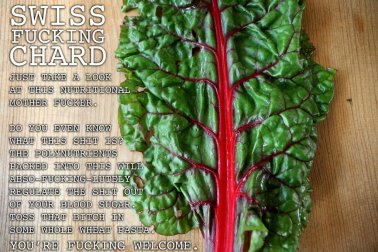 The Thugs really are speaking to an audience of people who probably never cooked and quite possibly never ate food that didn’t come from a drive-in, a box or a can. The thug life is about overcoming struggles, disadvantages, and bad influences to succeed and thrive despite any obstacles. The Thug Kitchen is “a fucking wake-up call. This for that section of the grocery store that you avoid. This is for the drive-thru lines so long that they block traffic. This is for ketchup and pizza qualifying as fucking vegetables. This is for everyone who wants to do better but gets lost in the bullshit.” The Thugs understand what Jamie Oliver doesn’t: Have a f-ing sense of humour!
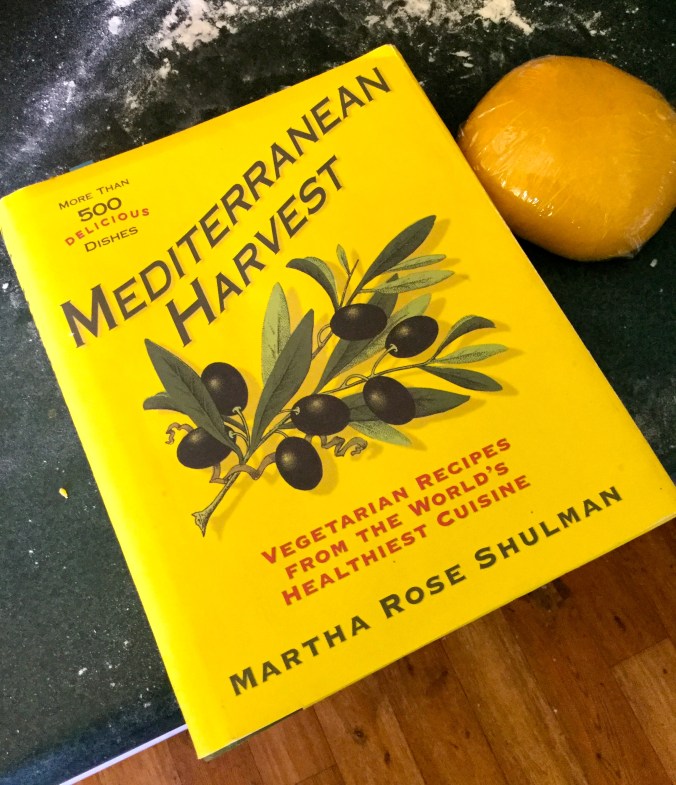
 The Thugs are absolutely spot on when they warn that the Chickpeas and Dumplings could cause a “f-ing food coma.” It really is that good. So is the Wedding Soup with White Bean Balls and Kale, a more than plausible veg version of traditional Italian Wedding Soup — especially if you make it with the Garlic Broth from the Kale Whisperer’s Fourth Cookbook of Christmas, Mediterranean Harvest, which you will have bought by now.





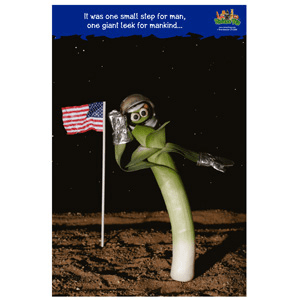 It would not be an exaggeration to say that in the high season, the leeks here approach the size of a baseball bat (but not a cricket bat). When I come across a recipe that calls for “4 leeks, white and light green parts only,” that could easily amount to about a ton of chopped leeks. Okay, maybe not a ton, but a lot more than you’d get from your standard, American, grocery store leek. What We Mean helpfully tells you that 1 medium leek = 3/4 cup chopped or 3 ounces (85 grams).
 Here’s your answer: 1 medium zucchini weighs 10 oz (285 grams). The most useful thing I’ve learned from What We Mean: a medium bunch of spinach leaves, 10 ounces (285 grams) of fresh spinach by weight will turn into 1 cup (236 ml) of cooked, squeezed dry spinach. There are also weight equivalents of various cheeses and nuts by volume and a handy customary / metric conversion chart.






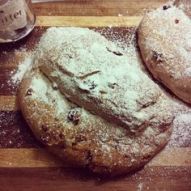 It tastes like my childhood and makes me happy, a little bit sad, and very grateful. And when it is a little stale, its makes the best toast ever.



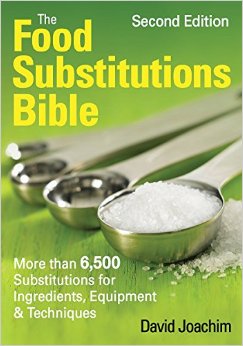
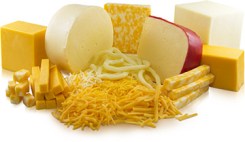 And what if you are making a potato and tomato gratin, and your recipe calls for a topping made with 1 cup (4 oz; 120g) of grated Gruyere cheese, but you don’t want to lay out the cash for an expensive chunk of Gruyere for a weeknight dinner? Look up Gruyere, and you’ll find that you can substitute Comte, Beaufort, or Emmental. OK, still pricey. But you know that Emmental is a Swiss-type cheese, so turn there and you find that, yes, indeed, you can substitute Jarlsburg (usually cheaper than Emmental) or Swiss cheese. I find the cheese substitutions particularly useful here in New Zealand. It can be difficult, and expensive, to buy the more obscure regional cheeses. And even if you can find Riccotta Salata, you might not want to shell out for it for an everyday meal.

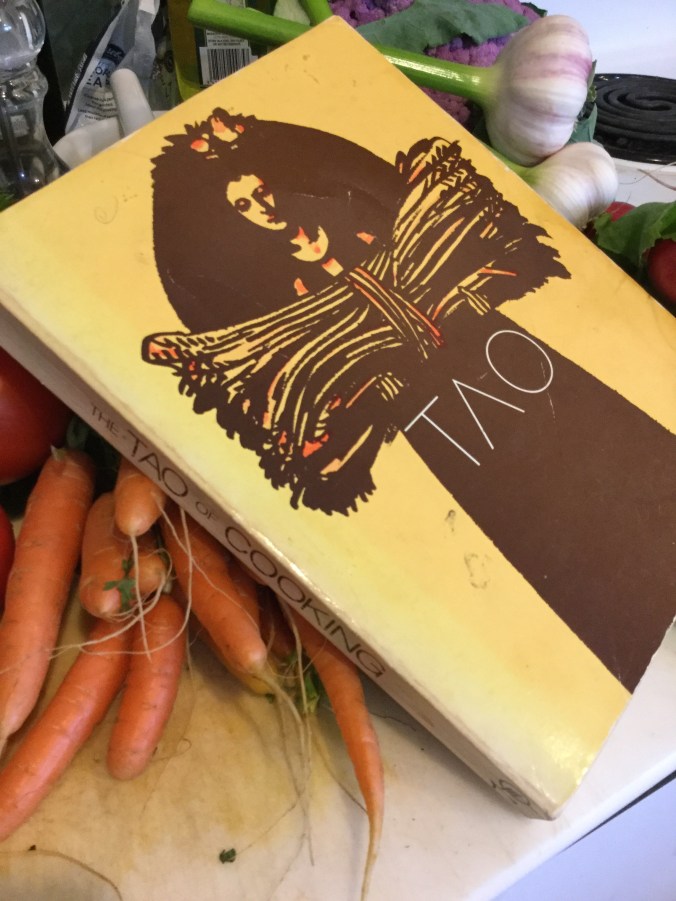 In August 1981, my then soon-to-be first husband and I loaded up a U-Haul trailer and moved from Athens, Georgia to Bloomington, Indiana. Our first apartment was a grim little efficiency all done up in 1970’s olive green and gold. The galley kitchen was in the living room, which had a giant grease stain in the middle of the carpet. It had only two positives: it was a short walk to the Indiana University campus, where I was working on a Master’s Degree in History, and it was just a couple of blocks away from the Tao Restaurant and Rudi’s Bakery.
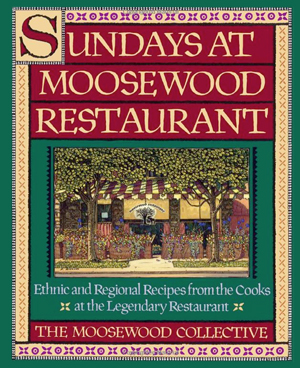
 It is splattered, dog-eared, and its spine is shot — as a well-loved cookbook should be. It was my first vegetarian cookbook and it is still on the top shelf of my cookbookcase. When I need a quick vegetable side, or a snappy salad, here’s where I go.


 The Kale Whisperer